If your tap is served by the City of San Diego, yes, the water is hard. The City reports an average of about 16 grains per gallon, or 276 mg/L. The typical range is 16 to 18 gpg, or 272 to 284 mg/L. Both numbers shift with the area and seasonal demand. Those numbers describe the City’s own system. They do not describe every district in the county, and they do not describe a private well.
Helix Water District adds a useful frame of reference. Helix calls water hard once it reaches 10 grains per gallon. It also says the imported Colorado River and State Water Project supply averages about 14 gpg. That is a supply figure, not a tap reading for each Helix customer. It does not speak to other parts of the county.
Why the answer changes from one address to the next
Hardness comes from dissolved calcium and magnesium picked up as water moves through rock and soil. Source water, seasonal blending, and local treatment all change the final mix. San Diego County holds many public systems and thousands of private wells. A single regional number cannot size equipment for one home.
Find the utility on your bill, then check its current water quality report. You can also call and ask for hardness. If the home runs on a well, it needs its own test. No public report covers an address-specific result. A quick hardness check can also give you a starting point.
What the published numbers can and cannot tell you
| Source | Reported number | How to use it |
|---|---|---|
| City of San Diego system | About 16 gpg average, with 16 to 18 gpg typical | Starting context for City-served addresses |
| Helix imported supply | About 14 gpg average, with 10+ gpg called hard | Supply context only, not a tap reading |
| Other public districts | Varies by district | Read the current report from your own provider |
| Private well | No utility average applies | Test at the tap, and use a certified lab for contaminants |
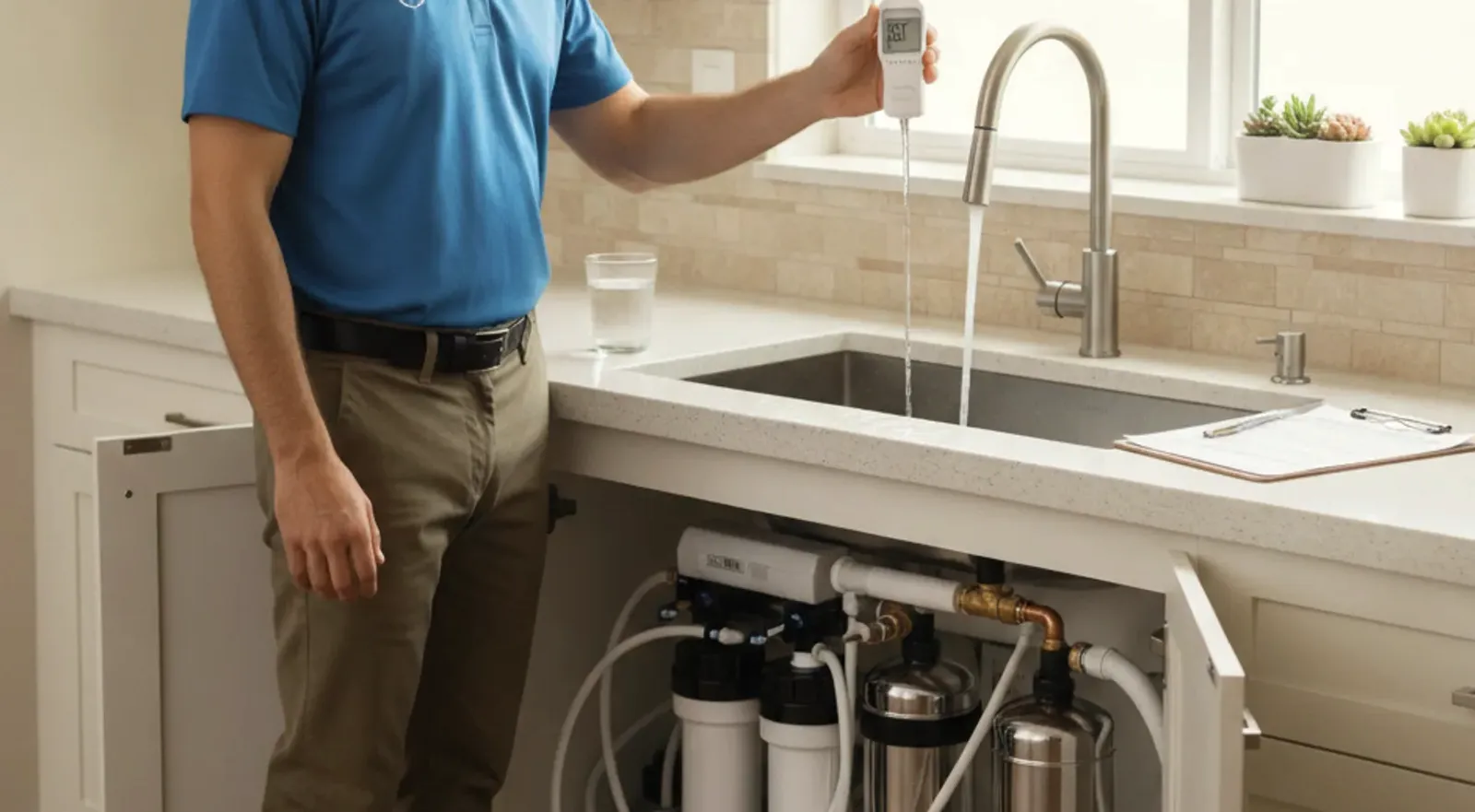
EPA homeowner guidance describes water above 7 grains per gallon as hard. A strip test or titration kit can measure hardness at home when used as directed. Neither option proves water is safe, and neither screens for PFAS, nitrate, or other regulated contaminants. Those answers need the right certified lab work and a qualified interpretation.
What hard water does inside a home
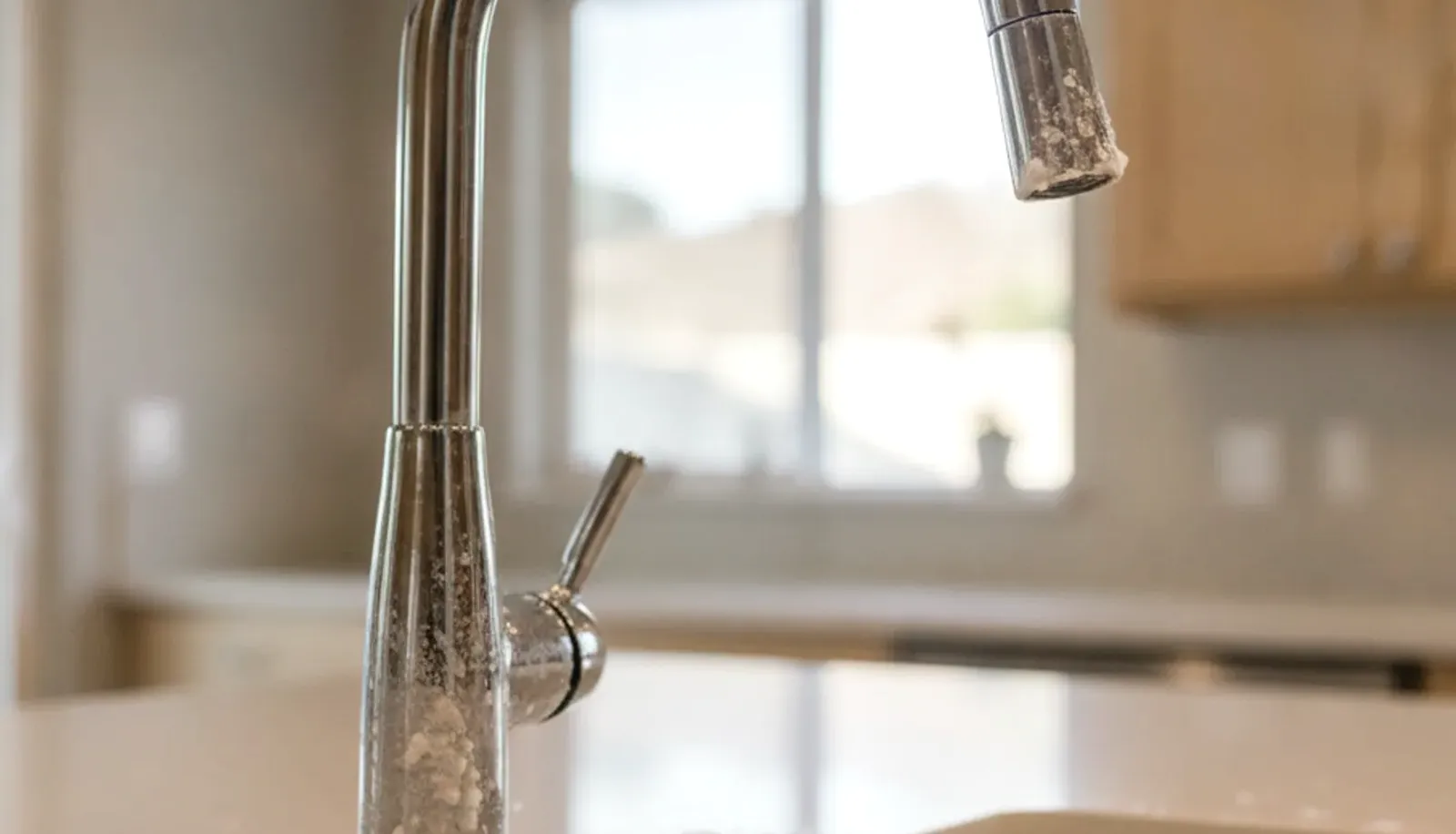
Hard water can leave chalky scale on faucets and shower doors. It can clog aerators and coat the inside of water heaters, dishwashers, and washing machine valves. Soap lather drops, skin can feel dry after a shower, and clear glass comes out of the dishwasher spotted. The rate of buildup depends on the measured hardness, water use, water temperature, and the equipment involved. A visible symptom can support a hardness test, but it never replaces one.
For a room-by-room checklist, see how hard water affects your home.
Picking treatment from your result and your goal
A water softener uses ion exchange to pull out hardness minerals. Size the softener from the measured hardness and the home’s actual indoor water use. Leave out irrigation where it makes sense. Then compare the exact model’s working capacity, salt efficiency, water efficiency, and NSF/ANSI 44 certification. Oversizing wastes salt and water without giving better results.
A salt-free conditioner does not remove hardness. Check the treatment claim and the limits for the specific model. If the real goal is soft water, make sure the proposal says hardness removal in writing. Our hard water solutions guide walks through the difference.
Before signing, ask for the hardness result, water-use assumption, and model number in writing. Also request the certification, the maintenance plan, drain needs, warranty, and final price. A reputable installer puts it on paper. For sizing basics, see our water softener installation overview.
Frequently asked questions
Is all San Diego County water hard?
No single countywide value exists. The City of San Diego reports hard water in its system. Helix publishes a hard imported-supply average. Each other utility and each private well needs its own source or test.
What is the average hardness in San Diego?
For the City of San Diego system, the published average is about 16 gpg. The typical range is 16 to 18 gpg, depending on area and demand. That number does not apply to other districts.
Which part of the county has the hardest water?
There is no verified countywide ranking to support that comparison. Check the serving utility’s current report or run a test on a private well.
Can a free in-home test check for PFAS or confirm safety?
A home visit gives a useful hardness reading for treatment planning. It cannot confirm safety or screen for PFAS and other contaminants. Those questions call for the right certified laboratory testing, plus guidance from your utility or local health department. A free in-home water test covers hardness, not contaminants.
Will a standard filter remove hardness?
Not in most cases. Carbon filtration and reverse osmosis each carry their own treatment claims. Match the model and its certification to the goal. Whole-home hardness removal usually needs equipment built and rated for that job.
When to bring in a pro
If scale keeps coming back, a tap hardness reading is the right next step. A separately licensed water-treatment professional can measure, recommend, and install the system that fits the home. Call (858) 400-4647 and Clear Water Pros SD will connect you with an independent local water-treatment professional.