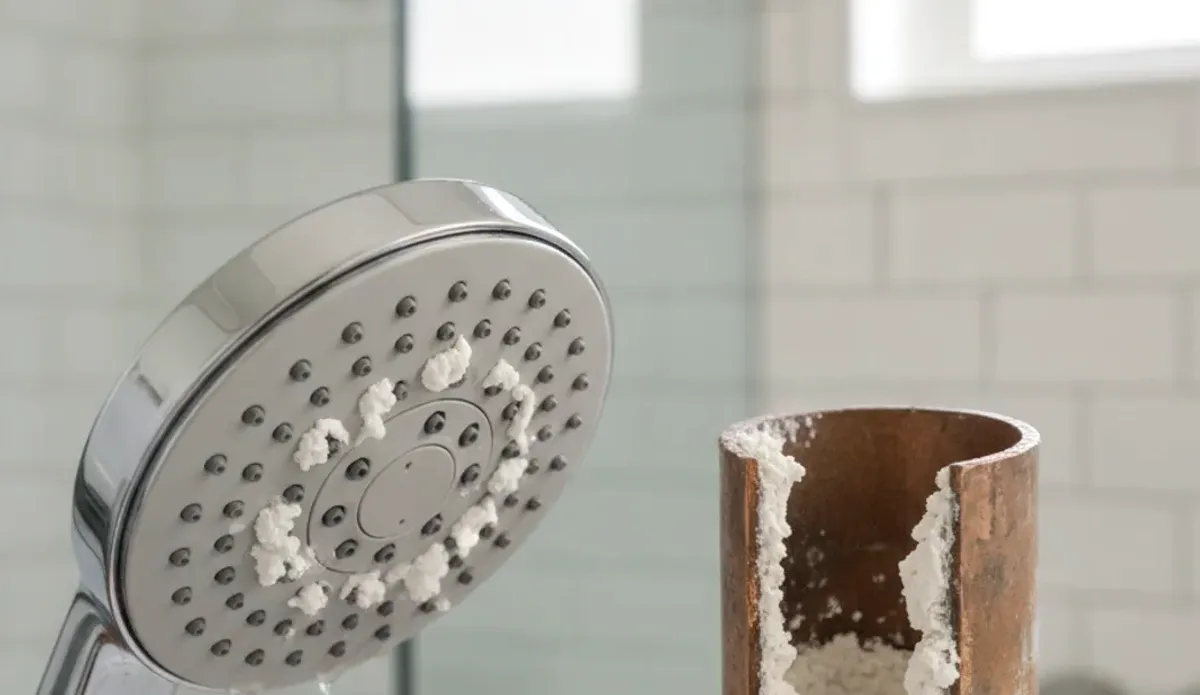
Mineral accumulation inside plumbing is a quiet threat to home water flow. Many San Diego County residents blame municipal supply issues or hidden leaks first. Yet dissolved calcium and magnesium often create the real problem. These minerals slowly coat pipe walls over many years. That coating shrinks the space available for water to travel. The result is noticeably weaker flow at every tap. Understanding this connection between hard water and low water pressure helps homeowners act sooner.
Ruling out simple causes before blaming scale
Start by checking whether the weak flow affects one faucet or everything. A single struggling showerhead usually means a clogged aerator. Soaking that small part in vinegar often restores normal output. If only hot taps run slowly, suspect mineral crust inside the water heater. Housewide pressure loss points toward bigger mechanical or plumbing concerns. A failing pressure regulator can drop flow regardless of water chemistry. Hidden leaks anywhere in the system also reduce force at the fixtures. Eliminate these possibilities before assuming hard water is the culprit.
How dissolved minerals shrink your plumbing
San Diego receives imported water from the Colorado River and the State Water Project. Both sources carry naturally high levels of dissolved calcium and magnesium. Those dissolved solids define what experts call hard water. Minerals do not stay dissolved forever inside your pipes. Heating, resting, or moving through tight spaces causes them to precipitate. They stick to interior surfaces as a chalky white layer called scale. This process happens so slowly that most people never notice it starting.
A half inch pipe opening loses meaningful capacity over ten or fifteen years. Older copper and galvanized steel plumbing shows this restriction most clearly. Many homes built before the 1970s still rely on those original materials. Scale does not just attack pipes. It blocks showerhead nozzles, coats faucet screens, and fills water heater tanks. Every coated surface forces water through a tighter gap.
Why hot taps suffer the most
Heat speeds up the rate at which minerals leave solution. Cold lines accumulate scale much slower than hot water pipes. Homeowners typically notice weak flow at the shower long before kitchen taps slow down. A heavily scaled water heater works significantly harder to heat the same volume. That extra effort translates into higher monthly energy bills alongside reduced pressure. If your hot side barely trickles while cold runs fine, temperature accelerated scaling is likely happening.
Galvanized pipes make the problem worse
Older neighborhoods across San Diego County still feature galvanized steel supply lines. That material has a rougher interior texture than modern PEX or copper. Rough surfaces give calcium and magnesium more places to grab and hold. Scale builds faster and thicker inside galvanized plumbing. Pressure drops gradually rather than suddenly in these older systems. If your house retains its original metal pipes, mineral restriction is highly probable.
Addressing hardness at the entry point
Cleaning a single showerhead provides temporary relief for one fixture. It does nothing for the miles of pipe hidden behind your walls. The systemic solution involves treating water before it enters the plumbing network. An independently licensed local professional can install a softener or conditioning unit at the main line. You can explore salt free water conditioning or traditional water softener installation to manage incoming minerals. For deeper purification needs, whole house water filtration offers another layer of protection.
Treating incoming water prevents new scale from forming going forward. It cannot dissolve heavy crust already fused to old pipes. Severely restricted plumbing might require a licensed plumber to replace affected sections. If pressure dropped immediately after adding a treatment unit, read our guide on low water pressure after a water softener. Proper sizing matters too. Our article explaining how to size a water softener covers matching equipment to household demand. Residents in areas like Encinitas or Carlsbad frequently seek these solutions due to regional water profiles.
Frequently asked questions
How can I confirm scale is causing my pressure loss?
A gradual decline spanning several years suggests mineral accumulation. Visible white crust on aerators supports this theory. Sudden pressure drops usually indicate mechanical failure or active leaks instead.
Will installing a treatment unit instantly restore strong flow?
New equipment stops future buildup but leaves existing pipe scale untouched. Flow may improve slightly as you clean individual fixtures. Severely narrowed pipes generally need physical replacement by a plumber.
Are there easy ways to check water hardness at home?
Inexpensive test strips provide a rough estimate of mineral content. For exact numbers, an independent professional can perform detailed testing. Knowing your baseline helps determine the right treatment approach. Our free in home water test referral connects you with someone who handles this.
Does standard homeowners insurance cover scale damage?
Policies typically classify gradual mineral buildup as normal wear and tear. Sudden accidental damage usually qualifies for claims while slow deterioration does not. Review your specific policy documents or ask your provider directly about their classifications.
Getting expert eyes on the problem
Weak flow that worsens over months deserves attention from a separately licensed professional. They can distinguish between plumbing failures and mineral accumulation accurately. Call (858) 400-4647 and Clear Water Pros SD will connect you with an independent local water-treatment professional.