Seeing orange or brown water flow from your faucet can be alarming. The imported supply reaching San Diego County typically arrives with very little iron. This blend comes from the Colorado River and the State Water Project. By the time it passes your meter, it rarely causes discoloration on its own. The issue almost always starts after that point. Aging interior pipes, a disturbed street main, or a failing water heater are the usual culprits. Figuring out which one is responsible changes the solution entirely.

Is discolored water safe for drinking?
Short bursts of rust colored water are mostly an aesthetic nuisance. They rarely represent a sudden health crisis for most households. Still, you should avoid drinking it while the color remains off. Switch to bottled water until the flow clears up completely. Running white clothes through the washer during this window is also a mistake. Iron oxide stains fabric quickly and permanently.
Certain situations demand immediate attention rather than patience. Contact your utility directly if the water turns dark brown or black. A strong sulfur or sewage odor accompanying the color change is another red flag. You should also act fast if your provider issues a boil water notice alongside the discoloration. These scenarios go beyond simple cosmetic pipe buildup.
Common sources of orange water locally
Three specific problems cause nearly all rusty water complaints on municipal supplies here.
Street level disturbances
Fire hydrant use or nearby pipe repairs often stir up settled minerals. Decades of harmless iron and manganese sit quietly inside distribution mains. Sudden flow changes push those particles straight toward your house. Local agencies usually post advisories when this happens. The color normally fades after a few hours of flushing.
Aging galvanized plumbing
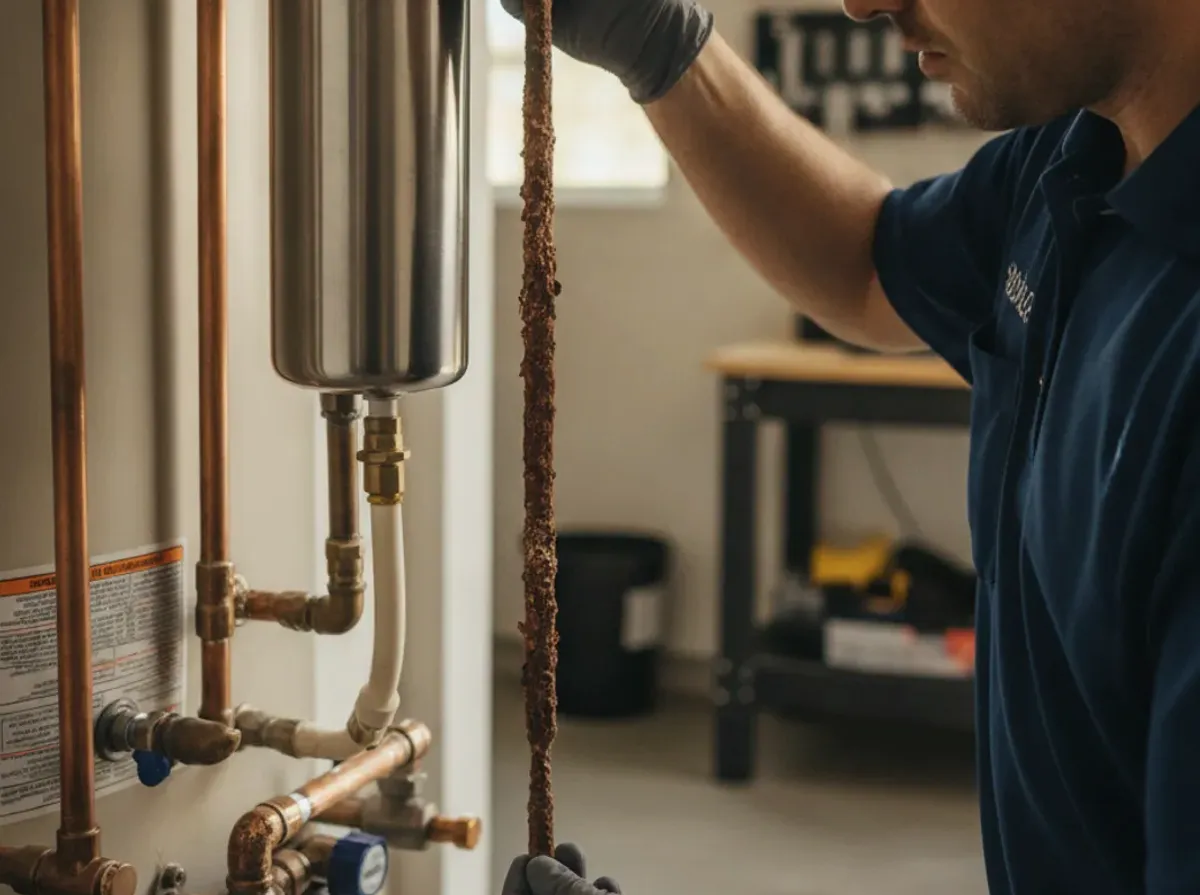
Homes built before the 1960s frequently contain galvanized steel supply lines. You will find these older pipes in central neighborhoods, National City, and parts of East County. The protective zinc coating wears away over many decades. Exposed steel underneath begins to rust from the inside out. Pressure shifts knock loose years of accumulated corrosion instantly.
Failing water heater tanks
Every tank style heater relies on a sacrificial anode rod. That rod intentionally corrodes to protect the surrounding steel lining. Once it depletes entirely, the tank itself starts rusting. This depletion typically happens between 8 to 12 years of service. Rust from this source only appears when you run hot water. That makes it the easiest culprit to isolate yourself.
Natural iron levels in the regional supply
The treated municipal water entering San Diego County rarely contains enough iron to stain fixtures. The EPA sets a secondary standard of 0.3 mg/L as the threshold where visible staining begins. Normal conditions keep the imported supply well below that limit.
Properties relying on private wells face a different reality. Groundwater in rural North County and backcountry areas absorbs dissolved iron directly from surrounding rock. If your home uses a well instead of city service, well water treatment in San Diego explains the specific approaches needed for groundwater. Those solutions differ significantly from what a municipal connection requires.
Pinpointing the exact cause
You do not need specialized equipment to narrow down the source. A few quick observations at your own taps reveal plenty.
Start by turning on the outside hose bib closest to your main entry point. This spigot sits before any interior plumbing takes over. Clear water here means the rust originates inside your house. Discolored water at this spigot points toward a street side event. In that case, reach out to your specific provider. That might be San Diego Public Utilities, Helix, Otay, Padre Dam, or Sweetwater. Ask them about recent maintenance near your address.
Next, check whether the problem affects only hot water or both temperatures. Rust limited to the hot side confirms a failing heater tank. Discoloration in both hot and cold lines suggests corroding galvanized pipes or a temporary main disturbance.
Finally, pay attention to how long the color lasts. Water that clears after running the tap for a few minutes indicates a passing event. Persistent discoloration day after day signals a permanent structural failure. That could be a dying heater or heavily degraded interior piping.
Addressing the problem properly
Once you rule out a street side disturbance, the appropriate fix depends on your findings. A heater showing rust only on the hot side needs professional evaluation. A separately licensed plumber must inspect the anode rod and tank integrity. That decision falls under plumbing repair rather than water filtration. Corroding galvanized sections isolated to one fixture also require plumbing expertise.
Filtration plays a major role once the primary source is identified. It also helps manage chronic low grade sediment issues that linger after a single event passes. Installing a sediment pre filter catches rust particles before they damage appliances. A full whole house water filtration system mounted at the main entry protects every downstream fixture. This matters greatly for houses still running older galvanized lines. Those pipes will continue shedding small amounts of rust for years. Older neighborhoods in La Mesa see this complaint regularly. Routine water filtration service in La Mesa frequently addresses these recurring sediment challenges.
Knowing exactly what flows through your specific pipes prevents guessing. An independent professional can perform a free in-home water test to analyze your actual supply. This identifies whether sediment, dissolved iron, or something else causes the discoloration. Recommendations then rely on real data instead of assumptions. Homeowners considering broader protection often wonder about pricing. Our guide covering whole house water filtration cost in San Diego outlines typical expenses for these setups.
Many residents also explore options like reverse osmosis drinking water systems for their kitchen taps after resolving whole house sediment issues. Others look into hard water solutions since mineral buildup and rust often appear together in older properties.
Frequently asked questions
Can I drink water that looks slightly orange?
Avoid consuming it until the flow returns to normal clarity. Short term discoloration from iron sediment is mostly cosmetic rather than dangerous. Switch to bottled water temporarily. Report dark brown water or foul odors to your utility immediately.
Why does my cold water stay clear while hot water turns brown?
This pattern almost always indicates a failing water heater tank. The sacrificial anode rod stops protecting the steel lining after 8 to 12 years. The tank interior then begins rusting directly into your hot water supply. A separately licensed plumber can evaluate the remaining lifespan.
Does the imported city supply naturally carry high iron?
No, the treated blend from the Colorado River and the State Water Project stays well below the EPA secondary standard of 0.3 mg/L. Problematic iron concentrations mostly affect private wells drawing from local backcountry geology rather than municipal connections.
Will adding a filter stop my water from turning rusty?
It depends entirely on the underlying cause. Sediment filters catch physical rust particles before they reach your fixtures. This helps significantly with aging galvanized pipes shedding debris continuously. However, filtration alone cannot fix a deteriorating heater tank or a broken street main. Those remain plumbing and utility responsibilities.
Should I contact my water provider or hire a plumber first?
Test your exterior hose bib before calling anyone. Discolored water there means you should contact your local utility agency first. Clear exterior water combined with rusty indoor taps points to interior plumbing. A separately licensed professional should handle that internal diagnosis.
Getting professional eyes on the problem
Persistent orange water always traces back to a specific mechanical or structural failure. Guessing between a dying heater, old pipes, or a street main wastes valuable time. A separately licensed professional should evaluate the situation if the discoloration lasts more than a few hours or keeps returning. Call (858) 400-4647 and Clear Water Pros SD will connect you with an independent local water-treatment professional.