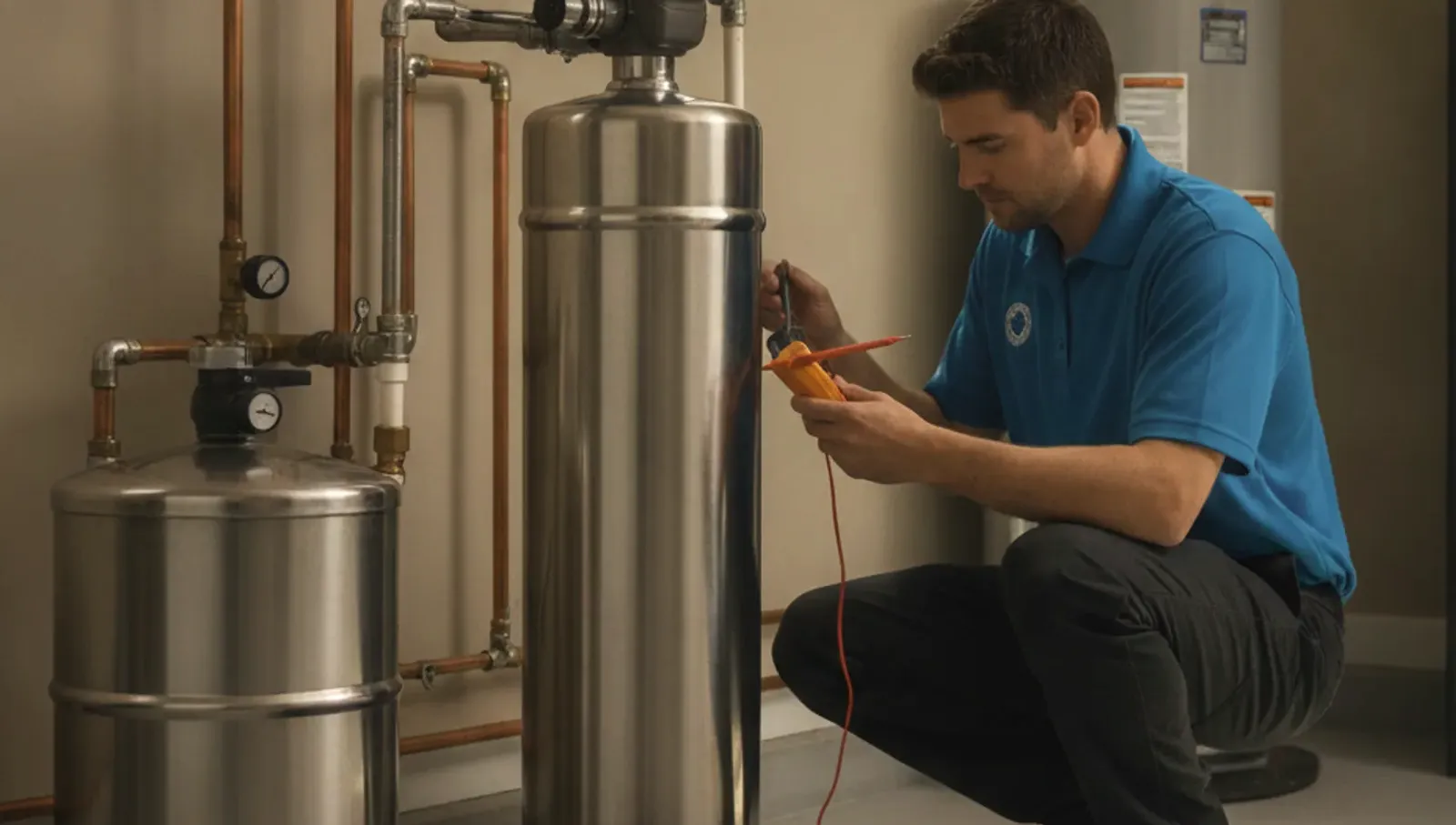
Understanding the water softener repair cost in San Diego
HomeGuide reports a national average water-softener repair range of $150 to $600. That figure is a general planning estimate published July 14, 2025. It is not a Clear Water Pros SD price or quote. It also does not represent a San Diego average. Your actual expense depends on several specific factors. The diagnosis, exact parts, labor, and access all matter. Warranty coverage, downtime, and the written scope play roles too.
You cannot price an individual job from a single symptom. A helpful provider needs detailed information before visiting. Document your observations carefully to speed up the evaluation process.
| Component to check | Symptom you notice | What the proposal should detail |
|---|---|---|
| Salt storage area | Unexpected water level, overflow, or changed salt use | The specific diagnosis and model remedy |
| Brine pathway or injector | Hardness returns even while the unit cycles | Testing results, required parts, and labor |
| Seals and valve head | Unusual cycling patterns or leaks near the top | The failed component and leak location |
| Motor or electronic controls | Blank screen, strange sounds, or no response | Compatible replacement parts and downtime |
| Resin bed capacity | Treated hardness climbs while the machine runs | Incoming hardness, treated hardness, and settings |
| Connections, drain, bypass, and tank | Constant drain flow or active leaking | Repair scope, safe isolation steps, and warranty |
Always ask if the diagnostic fee applies toward approved work. A solid written proposal names the broken part clearly. It should list parts, labor, applicable warranties, and expected downtime. Check whether a return visit is necessary as well.
Common internal failures in softening equipment
Symptoms describe a problem but never identify the exact failed part. A qualified professional must inspect your specific make and model. Only then can they recommend a proper water softener repair.
The control valve assembly. Ask the provider to name the exact valve model. They should explain the diagnosed fault and list compatible parts. The proposal must separate a simple part fix from full valve replacement. Find out how they will verify operation afterward.
The brine storage tank. A tank full of salt does not automatically explain a malfunction. Request that the provider pinpoint the root cause. They should show which maintenance steps or parts are included. Avoid comparing this repair to resin or valve fixes prematurely. Wait until the full diagnosis and scope are clear.
Overall treatment performance. Scale or spotting might return while the machine seems to run normally. Confirm both incoming and treated hardness levels. Compare those readings against the rated capacity and current settings. The EPA recommends sizing a softener using measured household water use and hardness.
Motors and circuit boards. Modern electronic units rely on small motors and control boards. These components drive the valve through every regeneration stage. A blank display or strange motor noise requires careful attention. An unresponsive unit also needs a proper technical evaluation. Follow the manufacturer instructions for your exact model. Symptoms alone cannot prove the fault is mechanical or electrical.
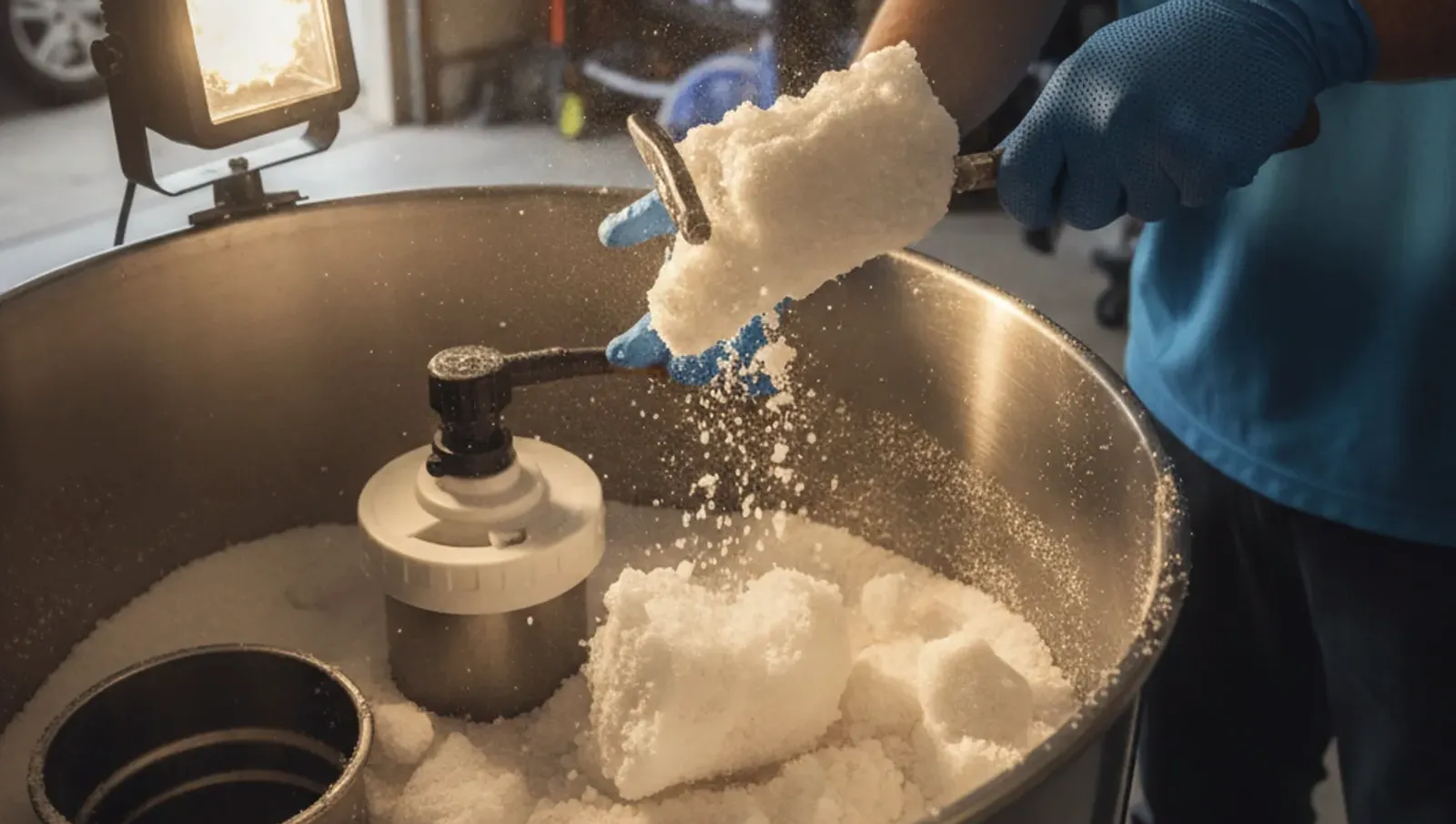
Choosing between fixing and replacing your unit
Equipment age provides some context for your decision. However, diagnosis, parts availability, and warranty status matter far more. Consider downtime and the overall condition of the entire system too. There is no universal age limit for deciding this question.
Repairing often makes sense when the broken part is readily available. The rest of the system should be in serviceable condition. Active warranty coverage helps lower out of pocket expenses. Expected downtime must fit comfortably within your household schedule.
Replacement deserves serious thought when a major assembly fails completely. You should look closer if compatible parts are no longer manufactured. Repeated unresolved faults also point toward a new system. Do not choose repair if it leaves other known problems untouched. Always compare written proposals for both fixing and installing a new water softener installation.
Review the applicable warranties, rated capacity, and maintenance requirements. Check water efficiency, salt usage, and total installed scope side by side. The EPA suggests verifying the exact NSF/ANSI 44 certification for any model. Look at rated working capacity and overall efficiency ratings too. Our guide covering the water softener cost breakdown for San Diego explains what details to request.
How local water conditions affect the evaluation
Household water consumption and hardness directly impact regeneration demand. The City of San Diego states its drinking water averages about 16 grains per gallon. Depending on demand and the served area, it ranges from 16 to 18 grains per gallon. Remember that this figure only applies to the City system. It does not cover every San Diego County address or private well.
Begin by reviewing the current report from your local utility. Pair that document with an appropriate hardness test. Match those inputs against your exact programming and model capacity. The EPA notes that oversizing equipment wastes water unnecessarily. Demand initiated regeneration adjusts to actual hardness and use. This approach works better than relying on a fixed timer.
Always follow the manufacturer instructions for ongoing maintenance. Keep detailed records of your settings, test results, and salt consumption. Our water softener maintenance guide for San Diego covers important checks. Discuss those items with your chosen provider during their visit.
Recognizing urgent issues versus routine maintenance
Some equipment problems require immediate action while others can wait. Knowing the difference protects your home from unnecessary damage.
Act promptly for: standing water, overflowing brine tanks, or active leaks. Stay away from any wet electrical components nearby. Isolate the machine safely using the manual if you can. Then contact a plumber or the original installer right away.
Schedule soon for: returning hardness without visible leaks. Book an appointment if salt consumption drops unexpectedly. Odd cycling hours or unusually frequent regenerations also need attention this week.
Plan ahead for: minor scale buildup returning slowly over several months. Older systems due for a preventative evaluation fall here too. Address these before they turn into sudden equipment failures.
Clear Water Pros SD is a referral network serving San Diego County homeowners. It connects residents with independent, separately licensed local water treatment professionals. Request a free in-home water test to discuss concerns. A basic reading does not identify every possible contaminant. The matched professional must diagnose the equipment before quoting any work.
Frequently asked questions
What determines the final repair bill for my softener?
HomeGuide publishes a national average range of $150 to $600. Treat that number as a budgeting reference rather than a guaranteed quote. The written scope, exact diagnosis, and required parts set your actual price.
Why did my treated water suddenly feel hard again?
Sudden hardness changes stem from multiple potential causes. Check your settings, bypass position, and salt levels first. Regeneration faults, capacity mismatches, or equipment failure could also be responsible. Have the professional confirm hardness before and after the unit.
Can a professional finish the repair in one trip?
That depends entirely on parts availability and the initial diagnosis. Ask the provider about expected downtime before approving anything. Find out if the scope requires scheduling a return visit.
Is buying a new unit cheaper than fixing an old one?
No universal rule exists based on tank material or age alone. Compare the diagnosed repair proposal against a complete replacement quote. Factor in warranties, efficiency ratings, maintenance needs, and downtime.
How do I know what actually broke inside my system?
Visible symptoms cannot establish the root cause on their own. Note the leak location, display behavior, and cycling patterns. Record salt usage and whether hardness has returned. A professional must physically inspect the exact model.
Getting help from a local professional
Contact a separately licensed professional if you see standing water. Schedule an evaluation when hardness returns or cycling acts strangely. Let a qualified expert handle complex electrical or mechanical diagnoses safely. Call (858) 400-4647 and Clear Water Pros SD will connect you with an independent local water-treatment professional.