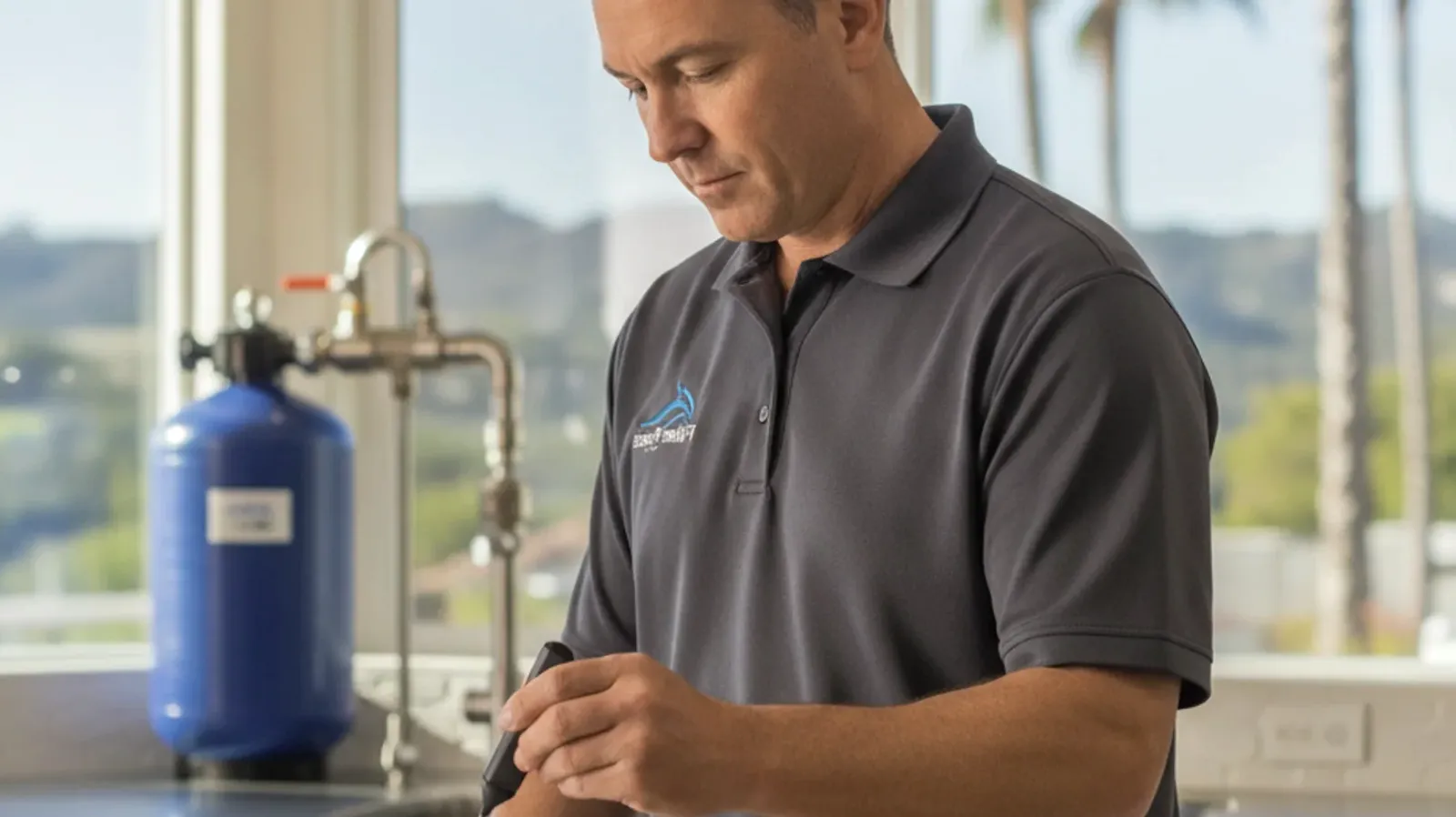
What total dissolved solids really measure
Total dissolved solids, or TDS, represents all minerals dissolved in your water. It combines everything into one single number. The figure does not tell you which specific chemicals are present. A small handheld device usually estimates this value through electrical conductivity. That reading cannot distinguish between calcium, sodium, nitrate, or arsenic. You only get a combined total rather than an ingredient list.
Many people assume a low number guarantees safe drinking water. That assumption is incorrect. Likewise, a high reading does not automatically signal danger. The USGS explains that conductance depends on the type and concentration of ions and serves as an approximation for dissolved material. Temperature, probe cleanliness, and calibration affect the displayed estimate.
Substances grouped inside the measurement
Several common minerals contribute to the final TDS reading. These include calcium, magnesium, sodium, chloride, sulfate, bicarbonate, and nitrate. Dissolved metals also add to the total. Suspended particles floating in the liquid belong to a completely different category. They do not factor into this particular metric.
Tracking this number helps compare untreated supply against treated output. It also establishes a baseline for your property. If the figure suddenly shifts, something in your supply has changed. However, the meter will never reveal which specific substance caused that shift.
The EPA secondary guideline explained
Federal regulators separate enforceable primary limits from nonmandatory aesthetic recommendations. EPA lists a secondary guideline of 500 mg/L for total dissolved solids. This threshold relates to cosmetic issues like staining, salty taste, colored water, and scale deposits. It does not address health risks from individual contaminants.
A result under 500 mg/L does not prove your tap water is harmless. A result above that mark does not confirm a medical threat. Labeling water as good or poor based solely on this figure is misleading. Your next step should always depend on identifying the actual substances present.
Why hardness and TDS are not the same thing
Hardness specifically tracks calcium and magnesium levels. Total dissolved solids captures a much broader collection of minerals. Your home might register a high TDS reading while having very soft water. An ion exchange softener removes hard minerals by swapping them with sodium ions. This process reduces scale but leaves other dissolved elements untouched. Consequently, your pocket meter might show almost no change after installing a softener.
If white buildup on fixtures bothers you, request a hardness test instead. If a specific chemical worries you, ask a laboratory to analyze that exact compound. Learn more about hard water solutions for typical plumbing problems around the house.
Interpreting readings across San Diego County
San Diego County relies on multiple municipal systems and many private wells. No single normal value applies everywhere. Find out which utility supplies your specific street address. Read their most recent annual quality report carefully. The City of San Diego portal only covers customers served directly by that municipality. Residents in places like Carlsbad or Chula Vista receive water from entirely different suppliers.
For meaningful comparisons, document the exact tap, date, and flushing time. Note whether you sampled before or after any treatment equipment. Always retest unexpected spikes using a freshly calibrated device. When precise identification matters, send samples to a certified laboratory rather than trusting a pocket meter.
Choosing the right laboratory analysis
Start with your specific concern instead of requesting every possible test. Utility advisories usually specify which analyte requires attention. Private well owners should consult local environmental officials about regional risks. The CDC recommends annual private-well testing for total coliform bacteria, nitrate, TDS, and pH. Additional sampling should happen after flooding, major repairs, or noticeable changes in taste or smell. Always use a state-certified laboratory for these analyses.
Compounds like PFAS, lead, and bacteria demand specialized testing methods. Ask the lab for reporting limits, units, and the standard used to interpret findings. Consider whole-house water filtration if broad contaminant reduction is your goal.
How reverse osmosis affects dissolved solids
Reverse osmosis membranes physically block many dissolved substances. Actual performance varies by feed water pressure, temperature, and membrane condition. Never apply a generic reduction percentage to every household system. Compare independently certified claims, reject-water rates, and replacement schedules before purchasing anything. NSF/ANSI 58 covers reverse osmosis systems, but certification does not guarantee removal of every possible contaminant.
Review options for reverse osmosis drinking water treatment to understand what questions to ask during a quote.
Frequently asked questions
Does boiling water lower the TDS reading?
Boiling kills microorganisms but leaves dissolved minerals behind. The concentration may actually rise as pure water evaporates from the pot.
Can a cheap pocket meter identify lead?
No. Conductivity meters only estimate total mineral content. Detecting lead requires specialized laboratory analysis with appropriate certified methods.
Will a water softener drop my TDS number?
Ion exchange replaces calcium with sodium. The total amount of dissolved ions stays roughly the same, so the reading rarely drops significantly.
Is zero TDS ideal for drinking?
Completely demineralized water tastes flat and lacks beneficial minerals. Most people prefer a moderate level for everyday hydration and cooking.
Getting professional guidance for your home
A separately licensed water-treatment professional should evaluate your supply when readings fluctuate unexpectedly or when specific contaminants worry you. Field measurements help determine appropriate equipment, but they cannot replace certified laboratory analysis for health-related concerns. Clear Water Pros SD is a referral network connecting homeowners with independent, separately licensed local water-treatment professionals throughout San Diego County. Call (858) 400-4647 and Clear Water Pros SD will connect you with an independent local water-treatment professional.