When a San Diego County well tap gives off that rotten egg smell, hydrogen sulfide gas is usually the reason. Written as H2S, it dissolves into groundwater and gives off an odor most people recognize on the first sniff. You don’t need much for your nose to pick it up, since human senses catch it at very low concentrations. So even a faint whiff at the kitchen sink is worth a closer look.
Where the gas actually comes from
Private wells are common across San Diego County, especially in East County and other inland areas. Those same neighborhoods see most of the hydrogen sulfide complaints. Two pathways bring the gas into your water.
The first pathway is natural, with groundwater picking up sulfur compounds as it moves through rock and soil. The second pathway comes from bacteria living in the well. Sulfate-reducing bacteria live in wells and plumbing. They feed on sulfur and release hydrogen sulfide as a waste product. These organisms are harmless to most healthy people, but the odor they create is unmistakable.
For most households the smell is a quality-of-life issue, not a health emergency. Still, running a full well test is a smart move, because sulfur often travels with other contaminants.
Pinpoint the source before you treat
Narrowing down where the smell originates saves a lot of wasted money. A few simple checks tell you most of what you need to know.
If every tap, hot and cold, carries the odor, the gas is in the source water itself. That means a whole-house solution is in order. If only the hot side smells, the well probably isn’t the problem. The reaction is happening inside your water heater, where a magnesium anode rod can interact with sulfur. That setup creates H2S right inside the tank, so the answer is at the heater, not at the well. If the smell comes and goes, or grows worse after water sits for hours, bacterial activity is the likely culprit.
Treatment options that match the cause
Once you know the source, the right fix becomes much clearer.
When bacteria are the issue
Shock chlorination is the standard first response. A chlorine solution disinfects the well and the plumbing, knocking back the bacterial colonies. The procedure is well documented in well maintenance guides. It often holds the smell off for a good while. It is not always permanent though, since the conditions that let bacteria thrive can return. Periodic rechlorination plus an ongoing treatment step is sometimes needed.
When the gas is persistent
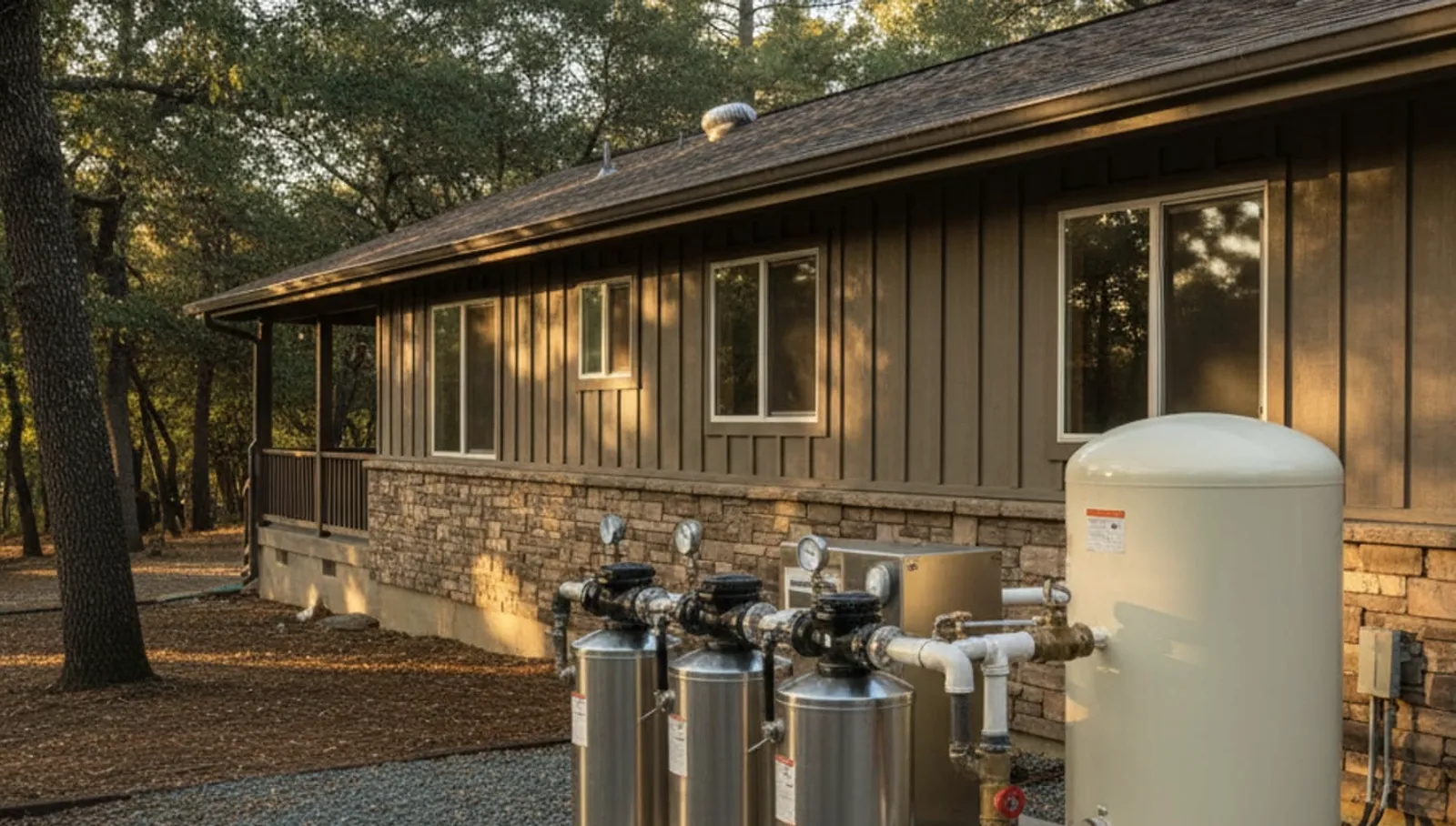
For steady H2S, whether from natural sources or bacteria, treatment happens where water enters the house. Lower concentrations often respond to catalytic carbon filtration. This is the same approach used in a whole-house water filtration system. Carbon has a limited appetite for sulfide though, so this works best at the lower end of the scale. Higher concentrations usually need oxidation followed by filtration. The gas gets converted into a solid particle, and a filter traps it. Common oxidation methods include air injection, chlorine dosing, or hydrogen peroxide. Air injection is popular with well owners because it adds no chemicals to the water.
Iron and manganese often ride along with hydrogen sulfide, and that combination changes the approach. Our hard water solutions page covers how multiple contaminants get handled together.
Test before you pick a system
Hydrogen sulfide almost never shows up alone in well water. Iron, manganese, sulfate, and bacteria often appear in the same well. The right setup depends on the full picture of what’s in there. Guessing gets expensive, because a system sized for the wrong contaminant won’t fix the smell.
A complete well water panel shows what is present and at what levels. That result is what sizes the system correctly. The free in-home water test from Clear Water Pros SD is a good starting point. A referred professional can walk through the full panel a well needs beyond a basic city-water screen.
Homeowners also see our guide to well water treatment in San Diego for the broader picture on multi-stage systems. If rusty discoloration is part of the issue, rusty water in San Diego covers the iron side.
Frequently asked questions
Is hydrogen sulfide in well water dangerous?
For most healthy adults it is a nuisance, not a poisoning risk. Very high concentrations can be a concern, and long-term exposure to elevated sulfate is worth watching. A complete well test gives you the numbers you need.
How do I tell if it is the well or the water heater?
Run both taps in the kitchen for a minute. If both smell, the well is the source. If only hot smells, look at the water heater and the anode rod.
Will a water softener fix the sulfur smell?
No, softeners are built for hardness minerals, not dissolved gases. They are usually paired with a carbon or oxidation stage, not used alone.
How often should a private well be tested?
At least once a year for bacteria and nitrates, with a broader panel every few years. San Diego County has no blanket requirement, so testing is on the homeowner. Our FAQ page has more on testing cadence.
Can shock chlorination fix the smell permanently?
Sometimes, especially when bacteria are the only cause. In wells where natural sulfur is also present, chlorination helps but ongoing treatment is still needed.
When a professional should take a look
If the smell shows up at every tap, a separately licensed water-treatment professional can size the right system. Testing that turns up iron, manganese, sulfate, or bacteria alongside the H2S means a pro should take a look. A pro can also confirm the install meets local code. Call (858) 400-4647 and Clear Water Pros SD will connect you with an independent local water-treatment professional.