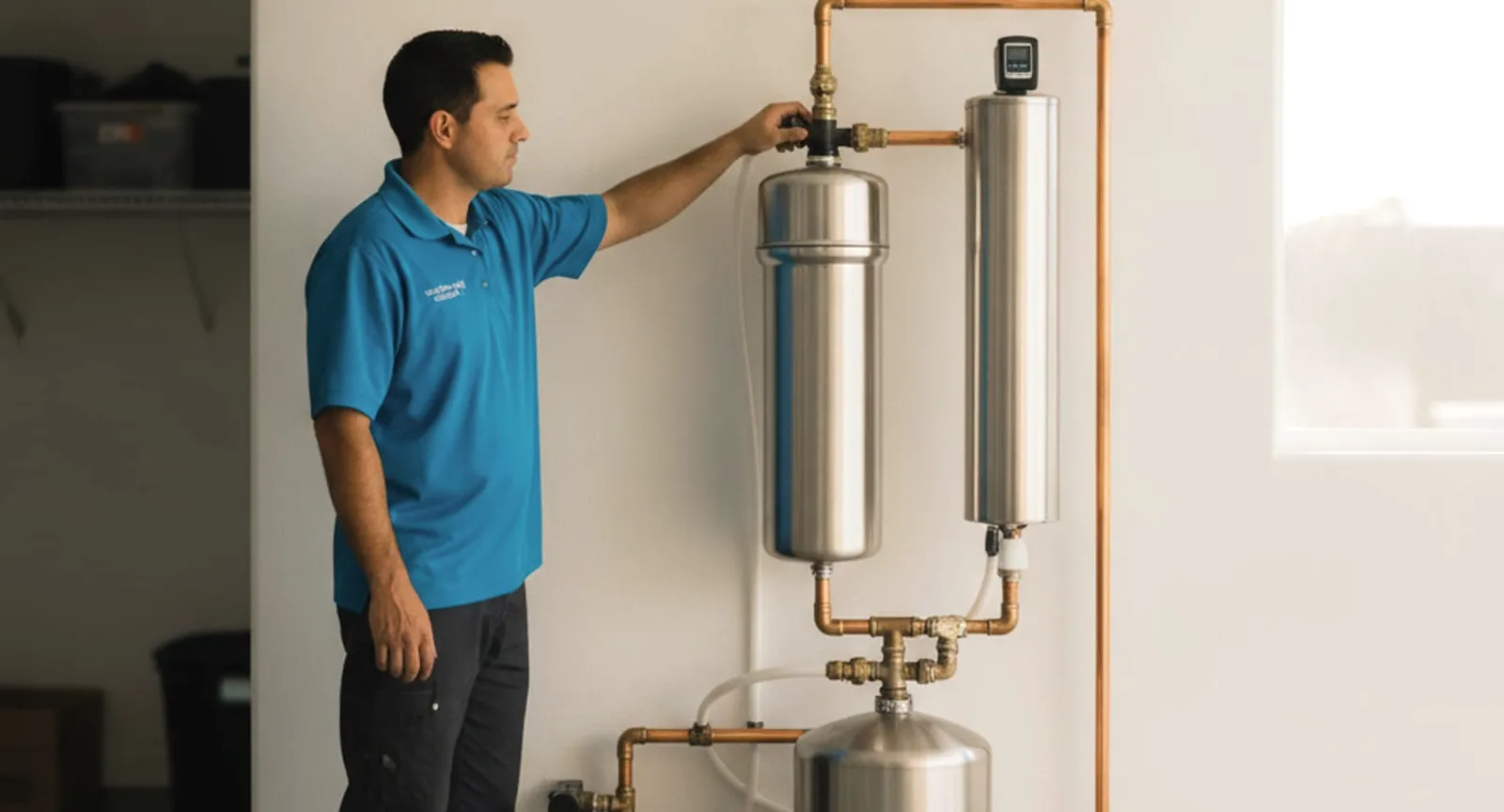
Figuring out if your home needs ultraviolet purification
San Diego County properties draw water from very different sources. Some rely on private wells deep in rural areas. Others receive treated municipal supply through city pipes. The right choice for one house might not fit the next door neighbor. Ultraviolet light chambers target specific microorganisms flowing through the system. They do not strip away dissolved minerals or chemical compounds.
Homeowners often wonder about is San Diego tap water safe before exploring options. Testing reveals what is actually present in the supply. A glowing lamp inside a pipe does nothing for mineral scale. It only addresses verified biological targets under precise conditions.
Clear Water Pros SD connects residents across San Diego County, California, with independent professionals. These separately licensed experts handle all evaluations and equipment work. The referral network itself performs no physical labor or testing.
Identifying your water source and testing needs
Private well owners should start with a certified laboratory analysis. The CDC well-testing guidance suggests annual checks for total coliform bacteria. That same guidance recommends looking at nitrate, total dissolved solids, and pH levels. Local health departments can point out additional tests suited to specific neighborhoods.
Municipal customers need to find their exact provider name on the monthly bill. Every utility publishes an annual quality report for its subscribers. Neighboring cities often use entirely different disinfection methods. A public utility report describes the supply leaving the plant. It does not diagnose problems hiding inside household plumbing.
Site issues like old storage tanks or cross connections change everything. Ask the utility and health officials what extra screening makes sense. An initial visual check at home helps organize thoughts. It cannot confirm microbiological safety on its own. Choosing any equipment requires actual laboratory numbers and a defined goal. Our article on how often test private well water San Diego covers scheduling details.
Understanding how ultraviolet chambers function
Water passes through a sealed housing containing a specialized lamp. This exposure can neutralize certain organisms listed in the product documentation. The process does not physically strain particles out of the stream. Dissolved chemicals remain completely unaffected by the light.
Performance relies on the entire setup rather than just the bulb. Equipment manuals must clearly state several critical parameters. First, the certification class and specific organisms covered matter greatly. Second, the rated flow and required dose define operating boundaries. Third, incoming water quality limits dictate necessary upstream filtration. Fourth, components like sensors, alarms, and controllers have strict specifications. Fifth, the mounting orientation and clearance space affect routine servicing. Sixth, power failure behavior and warning systems protect the household. Seventh, replacement schedules keep the output within certified ranges.
The EPA home-treatment comparison categorizes this technology strictly for biological contaminants. It lists dissolved chemicals as an explicit limitation. Buying a light chamber to fix hardness or arsenic is a mistake. Another verified stage must address those separate goals. Read more about whole-house vs under-sink water filter setups for layered approaches.
Responding to positive bacterial findings
A bad laboratory result demands investigation before anyone buys equipment. Public health protocols always come first in these situations.
Find an alternative safe supply immediately. The CDC advises against drinking well water suspected of harboring harmful germs. Follow local health department rules for cooking, brushing teeth, and bathing.
Verify the finding using proper sterile collection methods. State certified labs provide specific bottles and transport instructions. Ask if the analysis should separate total coliform, fecal coliform, and E. coli results.
Have a licensed well contractor examine the physical structure. They will look at caps, casings, seals, drainage, and standing water. Recent repairs or abandoned nearby shafts could be entry points.
Repair the actual pathway allowing contamination inside. Equipment does not fix broken concrete seals or poor surface grading.
Apply disinfection procedures based on current official guidance. Never guess chemical dosages from generic internet articles. Well volume and construction details require property specific calculations.
Consider ongoing treatment only after confirming the source is secure. Match any device to the verified organism, flow rate, and water chemistry. Retest the supply before returning to normal daily consumption. The CDC states that treated water needs verification to ensure the process worked. If boiling is advised during an emergency, follow those directions precisely. Boiling does nothing for chemical pollution like nitrate or arsenic. See our notes on nitrate in well water treatment options for related concerns.
Fixing the root cause before adding hardware
Bacteria sometimes appear because someone collected the sample incorrectly. Other times, recent flooding pushed surface runoff into the shaft. Installing a device without investigating leaves the real problem active.
Document any recent pump repairs, pressure drops, or plumbing changes. Ask the laboratory if a second confirmation sample is necessary. Request specific instructions on where that sample should originate. Have the contractor write down any structural fixes they complete.
Use certified laboratory results to verify the repair actually worked. Only then should anyone finalize long term treatment plans. Jumping straight to purchasing equipment skips essential diagnostic steps.
Preparing the water before it reaches the lamp
Suspended particles and heavy minerals block light from reaching organisms. They also coat the quartz sleeve and reduce effectiveness over time. Not every property requires identical upstream filtration stages.
Compare the lab report against the manufacturer feed water limits. Each pretreatment stage needs a specific purpose and sizing calculation. Maintenance intervals for those upstream filters must align with the main unit. Verification methods prove each stage is doing its job.
One property might need sediment cartridges followed by iron removal. Another might simply require fixing a cracked well casing instead. Our guide to well water treatment San Diego explains building sequences based on data. You can also explore iron filter vs water softener San Diego wells for mineral issues.
Reviewing equipment proposals carefully
Request detailed written quotes from the independently licensed professional. The document should list the full manufacturer name and model number. Verify the current third party certification and its exact performance claim.
Compare the rated flow against measured peak household demand. Confirm the feed water limits match your laboratory results. Check chamber materials and required plumbing connection sizes. Note the specific part numbers for lamps and quartz sleeves.
Understand how sensors, displays, and automatic shutoffs behave. Ask what happens during a neighborhood power outage. Record replacement intervals directly from the current product manual. Ensure sampling ports exist for future laboratory verification. Clarify charges for electrical work, permits, and ongoing service. Read warranty terms to know who handles future repairs.
A visible glow does not guarantee adequate biological neutralization. Trust the built in monitoring systems and scheduled lab tests instead.
Comparing treatment technologies side by side
| Treatment objective | Role of ultraviolet light | Additional evidence required |
|---|---|---|
| Bacteria, viruses, protozoa | Can neutralize listed organisms under verified conditions | Lab results, certified claims, flow and water limits |
| Cloudiness or suspended particles | Does not capture physical debris | Particle counts and specific filter designs |
| Mineral hardness | Leaves calcium and magnesium untouched | Hardness measurements and conditioner specifications |
| Arsenic or nitrate | Cannot alter dissolved chemical structures | Certified lab data and targeted reduction claims |
| Disinfectant taste or odor | Not designed for general aesthetic improvements | Utility reports and appropriate carbon filter claims |
No single device solves every possible water quality issue. Chemical concerns demand entirely different engineering approaches. Review information about arsenic in well water for specific chemical challenges.
Keeping the equipment running properly
Follow the exact manual for bulb replacements and sleeve cleaning. Sensor calibration and alarm testing prevent unnoticed failures. Never borrow maintenance schedules from a different brand or model.
Keep a dedicated folder for replacement dates and part numbers. Log any power outages, bypass events, or triggered alarms. Store laboratory reports alongside these maintenance records. Contact the health department if the unit operates outside documented parameters.
Plan post installation testing with a state certified laboratory. Sample locations must prove both the source and treated water meet goals. Finished equipment does not automatically equal guaranteed drinking safety. Learn about how often replace whole house water filter to coordinate maintenance routines.
Connecting with a local specialist
Properties with unexplained odors or recurring bacterial tests need attention. Any confirmed coliform finding warrants a visit from a qualified expert. Clear Water Pros SD links homeowners to separately licensed professionals who evaluate these situations. The network provides referrals but does not perform installations or operate laboratories.
Call (858) 400-4647 and Clear Water Pros SD will connect you with an independent local water-treatment professional.
Frequently asked questions
Is ultraviolet treatment mandatory for all private wells?
Not necessarily. Test the supply and inspect the physical structure first. Light chambers address verified biological targets when sized correctly. The exact model must match the laboratory findings and flow requirements.
Should homes on municipal supply consider this technology?
Do not decide based solely on having a city connection. Review the specific provider report for your address. Investigate any unique storage tanks or internal plumbing vulnerabilities. Consult the utility and health officials about site specific risks.
Will a light chamber remove hardness or dissolved chemicals?
No. This technology only addresses certain biological contaminants. Hardness, arsenic, and nitrate require entirely different treatment stages. Separate testing and verified equipment are needed for those goals.
Can I purchase equipment right after a failed bacteria test?
Follow health department instructions and verify the result first. Inspect the well and repair any structural entry points. Disinfect the system according to official protocols. Choose ongoing treatment only after confirming the underlying cause is resolved.
How do I confirm the installed unit is functioning?
Rely on the manufacturer sensors, alarms, and monitoring displays. Adhere strictly to the maintenance schedule in the product manual. Complete periodic laboratory testing to verify biological reduction. A glowing bulb alone does not prove adequate performance.