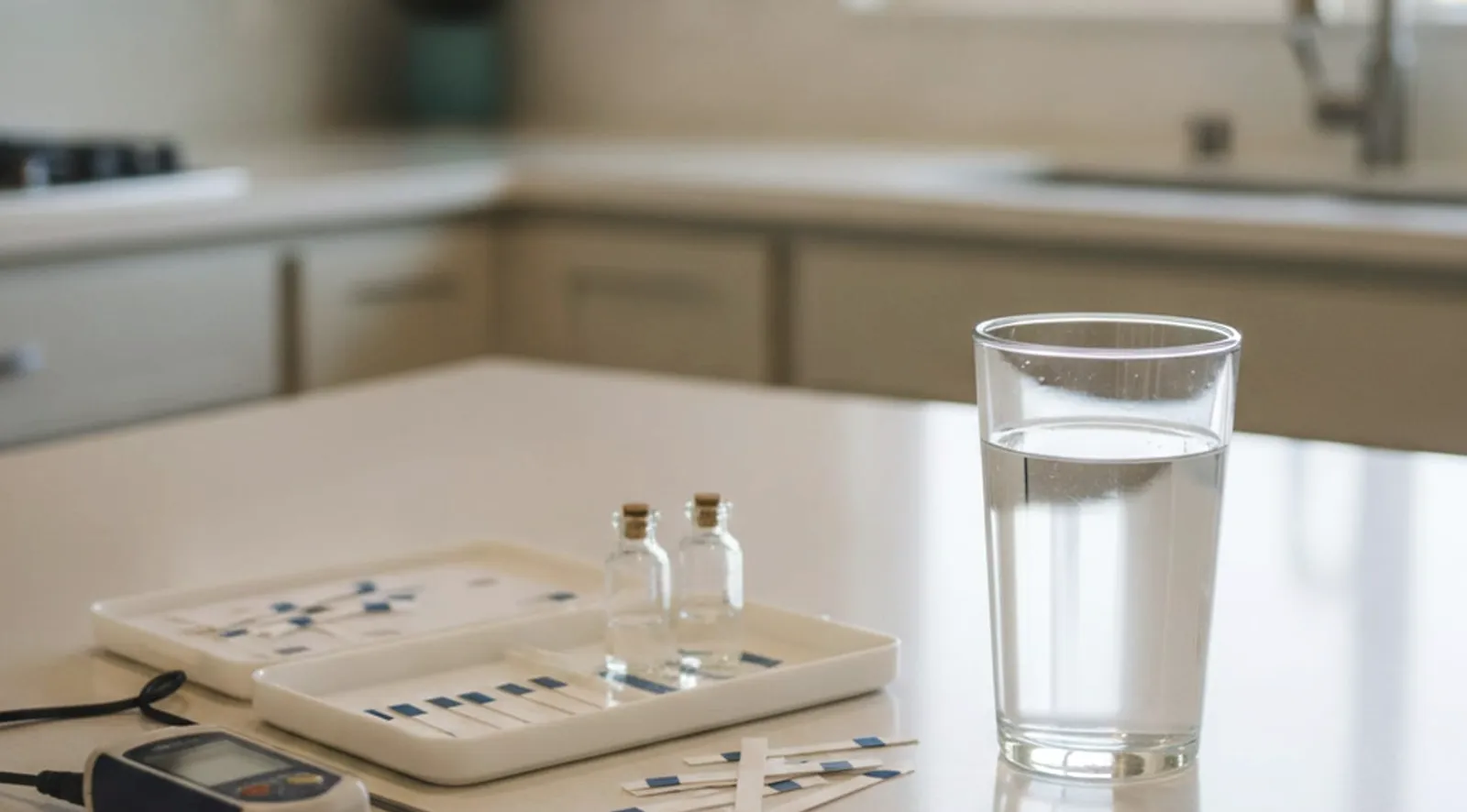
You fill a glass from the kitchen faucet and pause. Is this water actually fine to drink? The honest answer depends on your exact address, your plumbing, and whether a public utility or a private well supplies the property. No single statement covers every tap across San Diego County.
Private wells need their own testing rhythm
If your property draws from a well, public-water reports do not apply to you. The CDC recommends annual private-well testing for total coliform bacteria, nitrate, total dissolved solids, and pH. The CDC also advises asking local health or environmental officials which additional tests fit your location and using a state-certified laboratory.
Retest after flooding, well repairs, nearby land disturbance, or any shift in taste, color, or smell. If harmful germs or chemicals turn up, follow health-department instructions and switch to another safe water source until the issue is resolved. Treatment should target the identified contaminant, with follow-up testing to confirm the fix worked.
Find and read your utility’s report
San Diego County contains multiple public systems. A report from one utility tells you nothing about a neighboring district. Pull a recent bill or ask the property owner which system serves the address. If you live within City of San Diego boundaries, the City water-quality portal has what you need. For any other address, check that utility’s own website.
Read the newest annual Consumer Confidence Report. Look for current advisories. Match the system name and reporting year. Check each substance, its result or range, the unit, and the applicable limit or action level. Note any violation or required action. Don’t compare figures unless the units match. If a table confuses you, call the utility’s water-quality contact.
What a systemwide report can’t tell you
A utility report reflects monitoring across an entire distribution network. Once water crosses your property line, the service line, interior pipes, solder, fixtures, water heater, and stretches of low use can all change what reaches the glass. A systemwide number isn’t a lab result for your specific tap.
Pin down the question first. Maybe you noticed a change in color, taste, or odor. Maybe you’re concerned about older plumbing materials. Maybe the utility issued a notice. Ask the utility, the health department, or a laboratory which sample type and method suit that question.
A handheld meter can’t confirm the absence of lead, PFAS, nitrate, bacteria, or another specific substance. When a constituent-specific answer will guide a health, treatment, or property decision, use a state-certified laboratory.
Hardness, disinfectant type, and TDS each answer different questions
Hardness measures mainly calcium and magnesium. It helps explain scale and guides softener sizing, but it isn’t a drinking-water safety test. Rely on your serving utility’s report or a property-specific test rather than a blanket countywide figure. Our guide on whether San Diego water is hard walks through the details.
Don’t assume every utility in the county uses the same disinfectant. Check your serving utility’s report. If taste or odor drives the concern, verify the exact filter model’s certified reduction claim. Our post on chlorine versus chloramine in San Diego water breaks down the difference.
TDS is a combined measure. EPA’s 500 mg/L secondary guideline addresses aesthetic and technical effects such as taste, deposits, color, and staining. It isn’t a health-based cutoff and can’t identify which dissolved substances are present. Read what TDS can and cannot tell you before acting on a meter reading.
Steps that lead to a clear decision
- Confirm whether a public system or a private well serves the property.
- Read the current report and notices, or schedule appropriate well tests.
- Define the exact concern you want addressed.
- Use a certified laboratory when the answer depends on a specific constituent at your tap.
- Compare point-of-use scope with whole-house scope. A point-of-use device treats one selected tap. A point-of-entry system treats water entering the residence. A softener removes calcium and magnesium hardness but isn’t a general contaminant filter.
- Verify the complete model’s certified claim, maintenance schedule, replacement costs, and water use.
No single technology removes every contaminant. If you want broader coverage, explore whole-house water filtration options with a professional.
Frequently asked questions
Can I rely on my utility’s annual report for my specific tap?
The report reflects systemwide monitoring. Your interior plumbing, fixtures, and water heater can alter what arrives at the glass. For a tap-specific answer, a state-certified laboratory test is the right step.
Do I need to test a private well every year?
The CDC recommends annual testing for total coliform bacteria, nitrate, total dissolved solids, and pH. Test again after flooding, repairs, nearby construction, or any sensory change.
Will a TDS meter tell me if my water is safe?
No. TDS is a combined figure. It can’t identify individual dissolved substances or confirm safety. EPA’s 500 mg/L secondary guideline addresses taste and staining, not health risk.
Does Clear Water Pros SD install or test water itself?
No. Clear Water Pros SD is a referral network. It connects homeowners with independent, separately licensed local water-treatment professionals who perform all work.
When a professional should take a look
If your report raises questions, your well test flags a contaminant, or you want a trained assessment of how your plumbing affects water quality, a separately licensed professional should evaluate the situation. They can take field measurements relevant to a proposed treatment and explain what those readings can and cannot show. The visit doesn’t replace certified laboratory analysis for every possible contaminant, so bring your current utility report and any notices.
Request a free in-home water test to get started. Call (858) 400-4647 and Clear Water Pros SD will connect you with an independent local water-treatment professional.