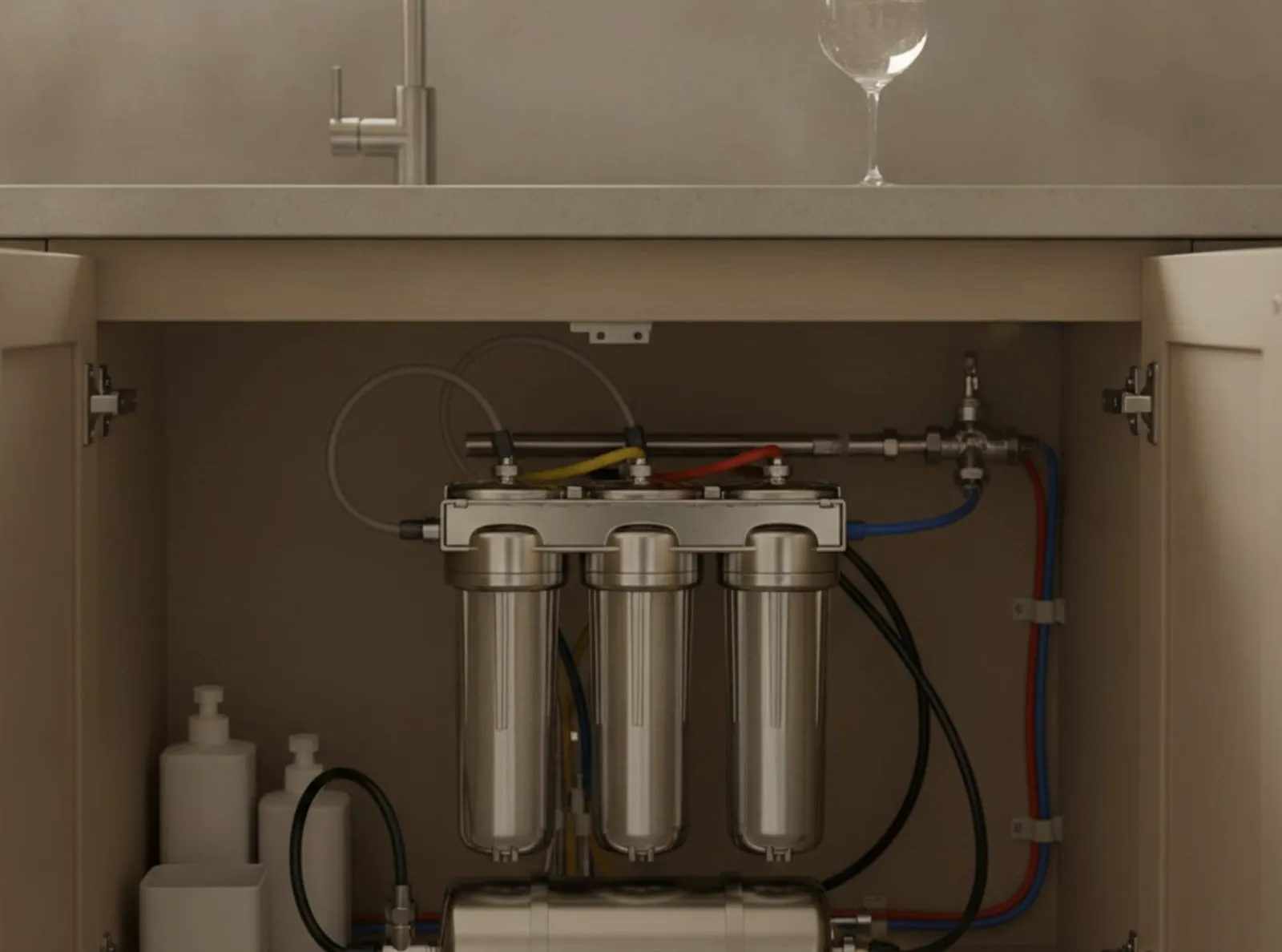
Water filter installation in San Diego usually means one of three jobs. An under-sink unit treats water at a single tap. A reverse osmosis system polishes drinking water with a dedicated faucet. A whole-house filter sits at the main line. Many homes also pair a softener with a filter. Most homeowners in the county are filtering for chloramine, hardness, or off tastes. The local supply is treated with chlorine and chloramine. It is drawn from local reservoirs, the Colorado River, and the State Water Project.
Why a water test comes first
Before any equipment goes in, the right first step is a free in-home water test. That visit confirms your hardness level, your chlorine and chloramine numbers, and any other concerns at your address. The blend delivered to your block can shift day to day, so generic advice rarely fits. A clear result tells the installer which system belongs at your home. It also gives you a baseline to compare against later.
What happens during the install
Once the test is in hand, the install follows a similar pattern across system types.
The installer starts with a site walk of your home. They check your water line, the main shutoff, and the space where the unit will sit. That could be under a sink, in a garage, or at the point of entry. A drain and a power outlet need to be nearby if the system requires them.
Next, the affected line gets shut off, and the working area is cleared and dried. The filter housing, RO unit, or whole-house cartridge is then mounted and tied into the plumbing. Fittings depend on the pipe material on site, which may be copper, PEX, or CPVC.
After the connection, the system is pressurized and flushed. That clears loose carbon fines and confirms every fitting holds without leaking. The visit ends with a quick walkthrough of the new setup. You learn where the new shutoff sits, when each cartridge gets swapped, and how to reset timers or lights.
An under sink water filtration or reverse osmosis setup adds a small branch line and a dedicated faucet. A whole house water filtration system ties in at the main line before the water heater. That way the whole home runs through it.
Time on site
Under-sink and reverse osmosis installs usually finish in two to four hours. Whole-house systems generally take a full day to complete.
The exact timing depends on how easy the connection is. A kitchen sink with a reachable cold line and open cabinet space is fast. A whole-house setup takes longer. The main line gets cut. A bypass valve goes in. Pipe may need rerouting around the new housing. Adding a water softener on the same visit extends the day. The softener needs its own drain and a nearby outlet.
Older homes with galvanized pipe or tight crawl spaces can push either job past the usual window. A main line that is hard to reach adds even more time. A site visit before the work day matters so much because it flags those complications before anyone is mid-install.
What changes the price
Labor for a basic under-sink or reverse osmosis system generally runs a few hundred dollars. Whole-house install labor lands higher because the main-line work adds time and parts.
A few details tend to move the number in San Diego homes:
- The distance from the water line to the mount point
- Whether a bypass valve or a new shutoff has to be added
- Copper versus PEX connections, since older homes often need different adapters
- Whether old equipment has to come out before the new unit goes in
A firm written number comes from seeing your specific setup, not from a phone quote. Our whole house water filtration cost guide walks through the breakdown for whole-house systems. For reverse osmosis, the install itself is usually a smaller line item next to the equipment.
Permits in San Diego County
Point-of-use filters like under-sink and reverse osmosis units usually do not need a permit. Whole-house systems that cut into the main supply sometimes do, depending on the city and the scope of the work.
A filter that attaches to an existing line is generally treated as a fixture swap. It is not a permitted project. Work that cuts into the main supply, adds new shutoffs, or reroutes pipe can cross into permitted plumbing territory. That depends on your local building department. Rules vary by city within the county, so ask your installer directly before work starts rather than guessing.
How to pick the right installer
Start with a water test, not a sales pitch, since the right system depends on what your water actually contains.
A few things worth confirming before you book:
- Will they test your water first? An installer who quotes a system before seeing your readings is guessing.
- Will they walk you through the tradeoffs? A solid pro explains why one option fits your home over another, rather than pushing the priciest unit.
- Do they handle the full job? That includes taking out old equipment, pressure testing the new setup, and showing you the maintenance steps.
- Do they know your city’s plumbing quirks? Older neighborhoods with galvanized pipe or unusual main-line access need an installer who has worked in similar homes.
Clear Water Pros SD connects homeowners with vetted local pros across the county. The process starts with a free in-home water test. That way the recommendation matches your actual water, not a generic package. Scheduling depends on your area and the pro’s calendar. Call (858) 400-4647 to get on the schedule.
Frequently asked questions
Can I install a water filter myself?
Swapping an under-sink cartridge is a reasonable DIY task for someone comfortable with basic plumbing. A full reverse osmosis system, a whole-house filter, or any work on the main line is a different scope. A mistake there can mean a hidden leak inside a wall or under a slab. Most homeowners have the original system professionally installed and handle cartridge swaps themselves later on.
Does a water filter reduce water pressure?
A properly sized system should not cause a noticeable drop. Undersized filtration for your household flow rate causes low pressure. A cartridge that is overdue for replacement does too. Correct sizing during the site visit is what prevents this.
Can a water filter and a water softener go in at the same time?
Yes, and it is common here given how hard the local water runs. The softener usually sits first in the water’s path. The filter goes after it, so scale does not build up inside the housing. Doing both in one visit is generally more efficient than two separate appointments.
How often does a whole-house filter need a new cartridge?
Most whole-house cartridges need replacement every three to six months. That depends on your household usage and the sediment level in your area. Your installer should set the schedule for your specific unit during the walkthrough.
Is a plumber the same as a water filtration installer?
Not always. A general plumber can handle the pipe work. A filtration-focused installer is more likely to size the system correctly for your hardness numbers. The same goes for chloramine. They are also more likely to know the maintenance rhythm for that exact equipment. Ask directly about their experience with the system you are getting.
When to bring in a pro
If your water tastes off or leaves scale on fixtures, a separately licensed pro can sort it out. If you are ready to plan a filter install, the same applies. Call (858) 400-4647 and Clear Water Pros SD will connect you with an independent local water-treatment professional.