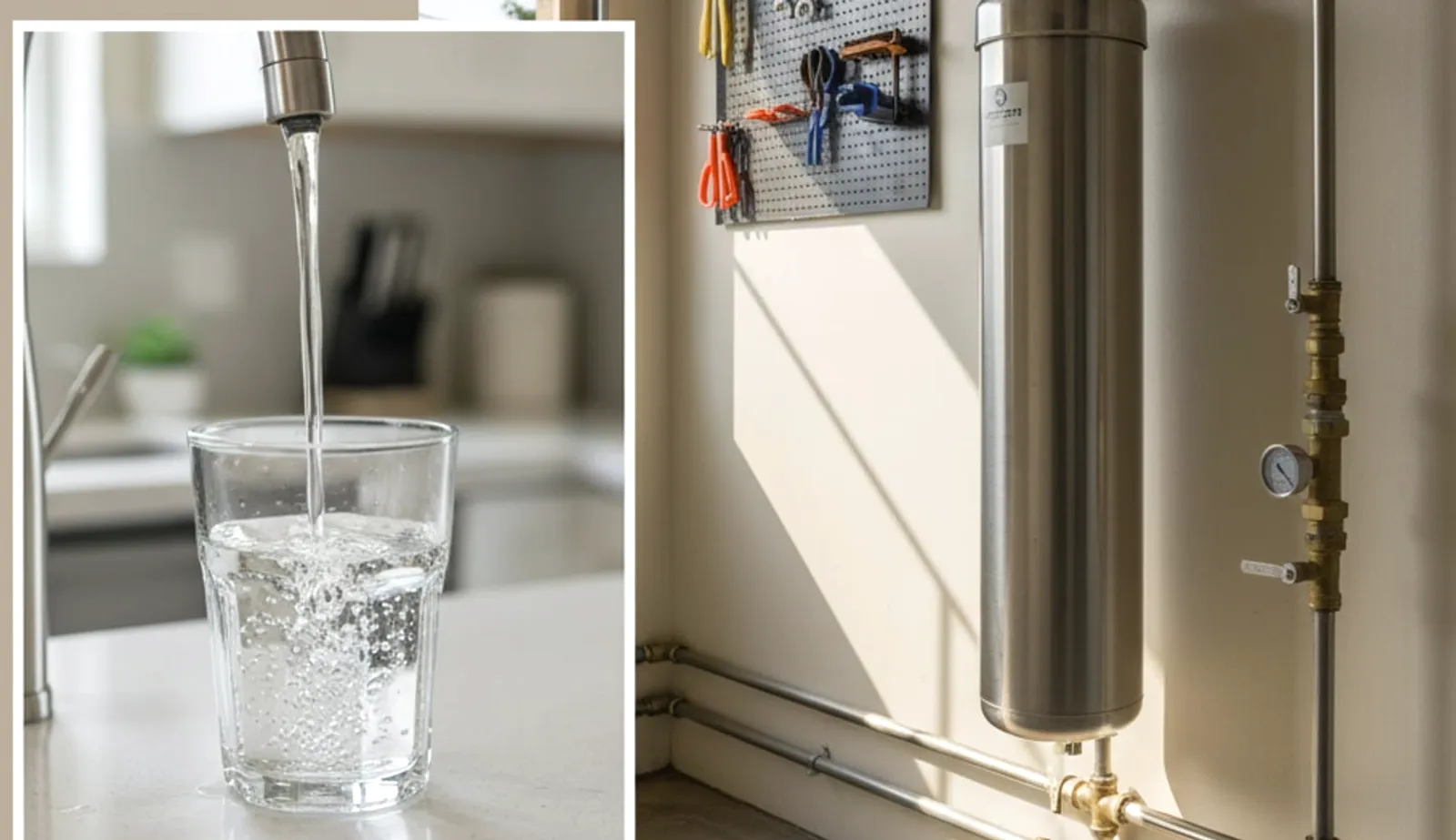
A lingering chemical flavor after adding a filter frustrates many homeowners. Buying another cartridge rarely solves the underlying problem. Several factors keep that unwanted taste in your glass. A licensed specialist can pinpoint the true cause.
Identify the disinfectant your utility uses
Municipal suppliers add chemicals to keep drinking supplies safe. Some utilities rely on free chlorine for this purpose. Others prefer chloramine during specific treatment phases. Your local provider might even switch between them throughout the year. Check recent consumer reports or public notices from your water supplier. The exact chemical used matters because different filters target different compounds. A strange flavor never proves equipment failure on its own. Read more about chlorine vs. chloramine in San Diego water for local context.
Match your filter to the correct compound
Removing free chlorine requires different media than removing chloramine. Many consumers assume all carbon blocks handle both tasks equally well. That assumption leads to ongoing disappointment at the kitchen faucet. Look closely at the performance data sheet for your specific unit. The documentation must explicitly list chloramine reduction if that is what your supplier uses. General marketing language about improving taste does not guarantee removal of combined chlorine. Certification standards like NSF/ANSI 42 cover aesthetic improvements, but they do not address every possible contaminant. Verify the exact claim before spending money on replacements.
Reasons the unwanted flavor persists
The flow rate exceeds the rated capacity
Every certified device has maximum operating limits. Pushing water through the media faster than intended reduces contact time. Insufficient contact time means the chemical passes right through. Compare your household demand against the manufacturer specifications for that model. A professional can measure actual flow and compare it to those limits. Consider exploring whole house water filtration options designed for higher demands.
The media has exhausted its lifespan
Carbon stops working once its adsorption sites fill up completely. Each replacement element carries a specific gallon rating or time limit. Actual longevity depends heavily on incoming quality and daily volume. Follow the exact instructions provided for your specific model number. Generic neighborhood advice cannot replace manufacturer guidelines for your equipment. Learn about proper schedules by reading how often to replace a whole house water filter.
Untreated water is bypassing the system
Plumbing mistakes sometimes route supply lines around the treatment device entirely. Check the installation manual to understand where treated water should flow. Never guess valve positions based on internet diagrams meant for other houses. A qualified technician can trace the piping to verify correct routing.
Another substance is causing the issue
Not every bad flavor comes from municipal disinfectants. Hydrogen sulfide produces an odor resembling rotten eggs in groundwater sources. Sulfur bacteria inside pipes or water heaters create similar problems. Minnesota health guidance notes these organisms require different solutions entirely. Pinpointing which fixtures produce the smell helps narrow down the source. Never taste questionable water to diagnose a problem yourself. Proper testing provides the only reliable answers. For example, reverse osmosis drinking water systems address many dissolved substances that standard carbon blocks miss.
Information to gather before requesting service
Documenting a few details saves time when speaking with a specialist. Write down whether cold lines, hot lines, or both carry the taste. Note exactly when the problem started happening in your home. Check if the flavor worsens after the house sits empty overnight. Record the date you last changed the cartridge inside the housing. Identify which faucets sit upstream versus downstream of the equipment. Keep the original product manual handy for reference during the visit. Request a free in home water test to establish baseline field measurements.
When replacing parts will not help
Swapping cartridges repeatedly wastes money if the root cause remains hidden. Incorrect sizing, faulty plumbing, or misidentified compounds defeat new media quickly. A separately licensed professional evaluates the entire setup holistically. They compare household flow rates against certified performance claims. This systematic approach prevents unnecessary part purchases. You can also review under sink water filtration setups if point of use treatment makes more sense.
Frequently asked questions
Why does my pitcher leave a chemical flavor behind?
Pitcher reservoirs often lack the media required for chloramine reduction. Check the packaging for explicit claims matching your utility disinfectant. Capacity limits on small pitchers also restrict total volume processed effectively.
How long should a sediment or carbon block last?
Manufacturer specifications dictate the replacement interval for each unique model. Household consumption patterns and incoming quality alter actual service life significantly. No universal timeline applies across different brands or regions.
Does a strange taste mean my water is unsafe?
Flavor alone cannot determine safety or regulatory compliance levels. Review current consumer confidence reports from your municipal supplier immediately. Contact the utility directly if sudden changes occur without explanation. Reading about whether San Diego tap water is safe helps locate relevant local data.
Why does one bathroom taste different than the kitchen?
Supply lines feeding separate rooms might connect differently to treatment equipment. Unfiltered branches could deliver raw municipal supply to certain fixtures. A technician traces distribution paths to confirm where treated water flows.
Arranging a professional evaluation
Persistent flavor issues warrant inspection by a qualified technician rather than repeated DIY attempts. A separately licensed professional identifies whether the equipment matches your actual supply conditions. Call (858) 400-4647 and Clear Water Pros SD will connect you with an independent local water-treatment professional.