How to spot hard water in your home
Hard water minerals rarely announce themselves through scent or sight. Instead, look for scale, spots, or shifts in how soap foams. Other issues can mimic these clues, so run a proper hardness test before settling on any treatment option.
What you'll learn
- Common spots in the home where scale and water marks tend to show up
- Why soap lather can change as hardness increases
- Running a basic soap test as a hint instead of a true measurement
- The reason scale buildup in water heaters matters
- Cases where the symptoms might signal a different water or plumbing problem
Step by step
- Look over faucet bases and showerheads for white or chalky buildup, and jot down the locations where you spot it.
- Examine washed glasses and see if spots or a cloudy film linger even after a rinse.
- For a quick side-by-side, grab two clean clear jars, fill each with equal water, and add the same measured splash of plain liquid soap to both.
- Give each sample the same shake, then compare the suds and how cloudy each one looks. Remember, this is just a hint, not a real hardness reading.
- Peek at a faucet aerator you can reach easily for any mineral-like bits, but don't force or take apart anything under pressure.
- Write down what you notice, then confirm hardness using a test that gives an actual number before you pick out any equipment.
Sight clues and the soap test can hint at hardness, yet neither gives you a true level nor rules out other culprits. A free in-home screen from a provider might cover hardness if it's part of the visit. Find out what gets tested, ask for the result along with its units, and weigh treatment choices against their specific claims and upkeep needs.
Rather have a pro handle it?
Reach out to a separately licensed water-treatment pro in San Diego County. Inquire about the free in-home water test.
Keep learning.
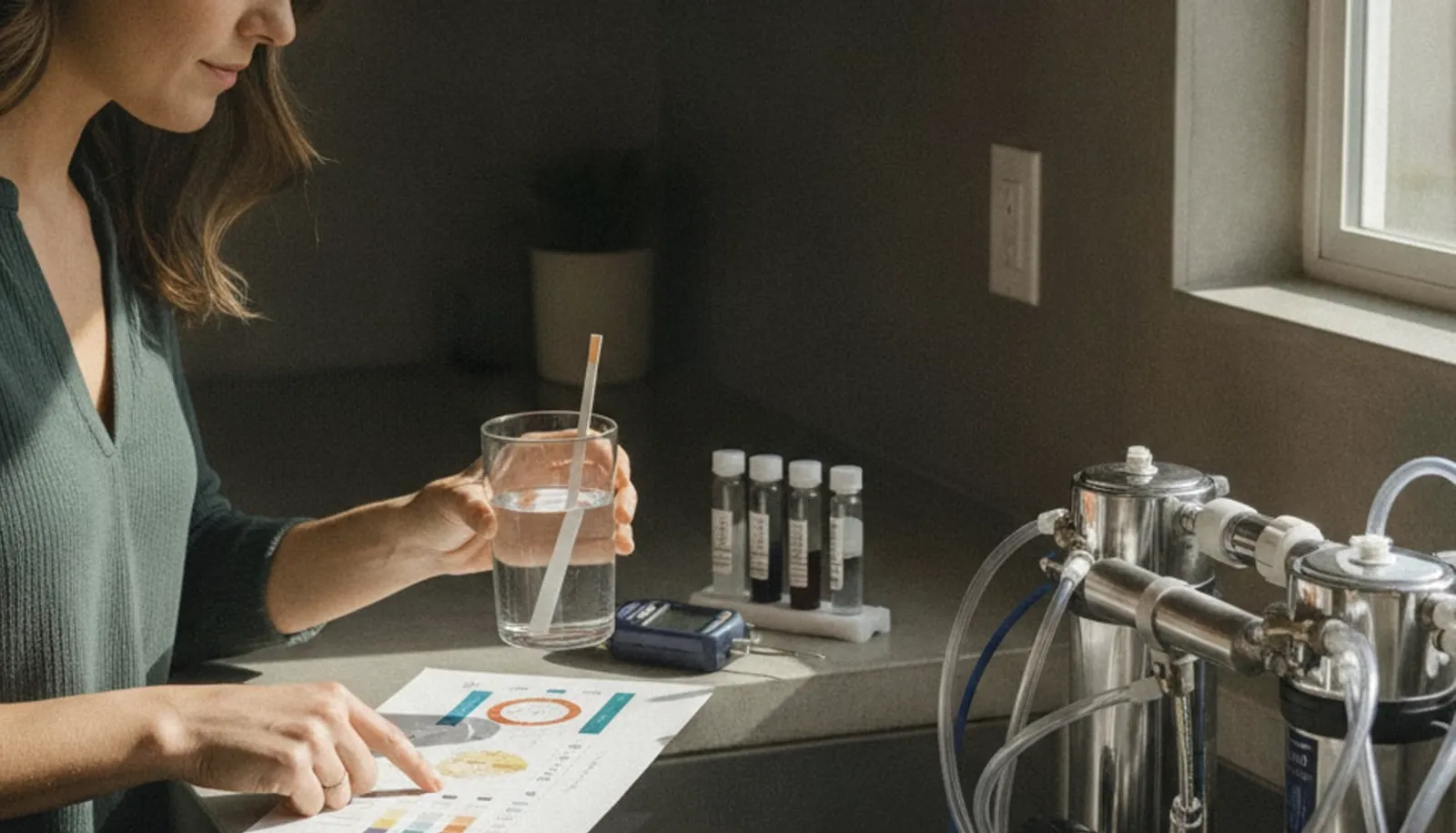
How to test your tap water at home
According to the City of San Diego, tap water in its distribution system typically measures around 16 grains per gallon, though the figure shifts by neighborhood and seasonal demand. A store-bought test strip can give a fast screening reading for whatever parameters that particular kit covers, yet it cannot stand in for a proper lab analysis or confirm that water is safe to drink.
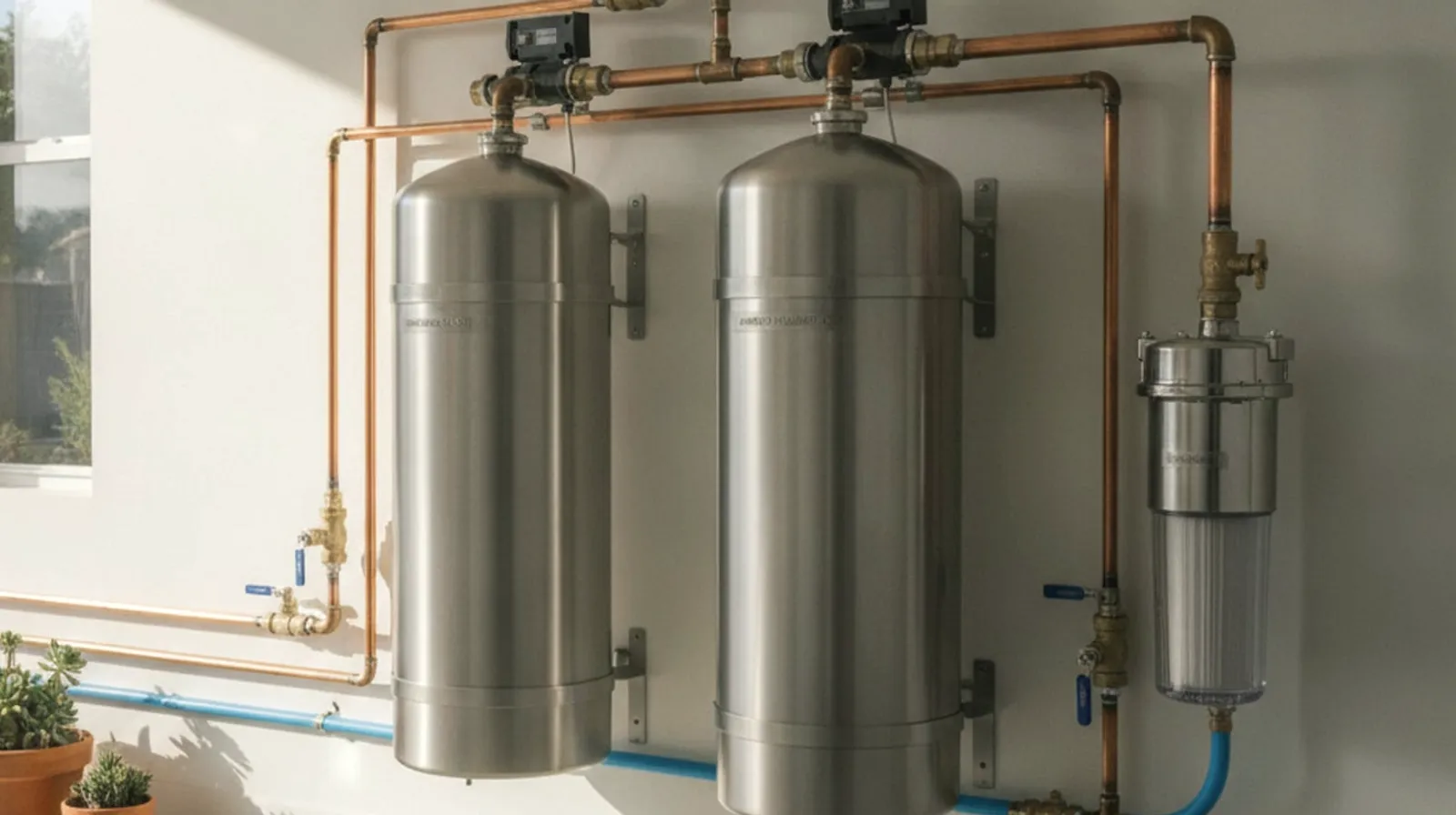
How a whole-house water filtration system works
A point-of-entry water-treatment setup sits on the line that feeds the home, so every fixture past it gets treated water. What gets removed depends on the specific gear, filter media, water flow, and what the unit is certified to reduce. Knowing this scope makes it easier to weigh a whole-house setup against a point-of-use unit attached to a single tap.
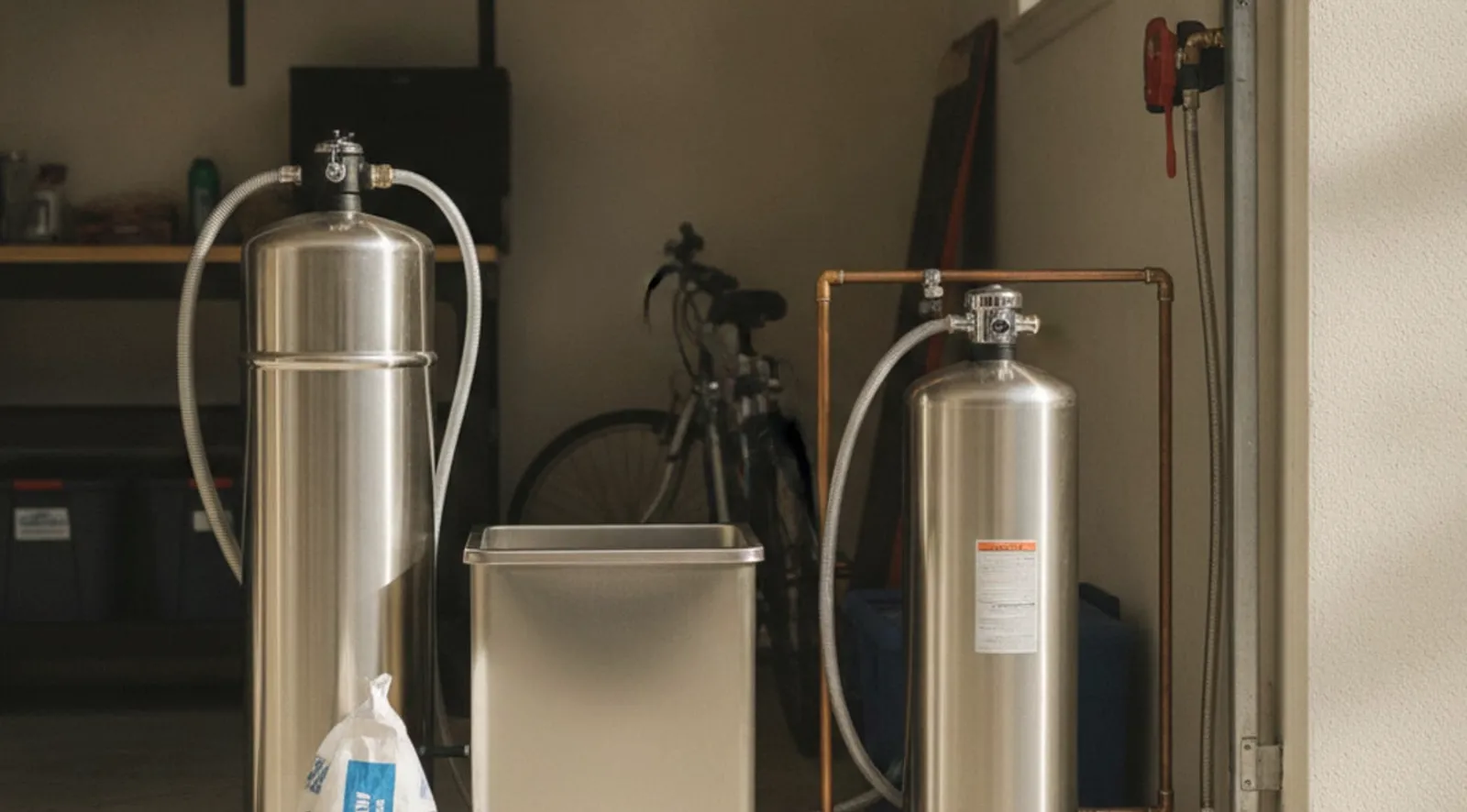
Salt-free conditioner vs salt softener, explained
Salt-free water conditioners and ion-exchange softeners don't tackle the same goal. A softener swaps out calcium and magnesium through ion exchange, lowering actual hardness. A salt-free conditioner leaves hardness ions in the water, so its value comes down to the specific model's scale-reduction claim, your local water conditions, and what you're trying to achieve.