How to maintain a water softener
The maintenance a water softener calls for is shaped by the unit's model, the salt or regenerant used, local water conditions, and how much water the household runs through it. Routine inspections can catch low salt, salt bridges, leaks, or odd behavior, but the manufacturer's manual is the source for timing and method.
What you'll learn
- Where to find the maintenance schedule and the approved salt or regenerant for your specific model
- What to observe when checking the brine tank
- Why the manual has to drive salt-bridge removal and tank-cleaning steps
- How hardness, household demand, and control settings shape regeneration
- The point where a leak, ongoing drain flow, or poor output calls for professional service
Step by step
- Look up the model number and open the current manufacturer's guide for approved salt, fill range, cleaning, and regeneration instructions.
- Standing on a dry floor with dry hands, glance inside the brine tank on the interval the manual lists, and note the salt level along with any crusting or unexpected standing water.
- Never hit, puncture, or pry material loose inside the tank. Follow the bridge-removal steps spelled out for the model, or reach out for service.
- Clean the brine tank only on the schedule and in the way the manufacturer directs, using approved materials and proper disposal.
- Match the control settings against your measured hardness and actual household use, and skip valve reprogramming unless the manual covers it.
- Look the system over for leaks or steady drain flow. Run the model's bypass or supply shutoff exactly as instructed, keep clear of any wet electrical parts, and bring in a licensed provider if the unit needs isolating or diagnosing.
Salt type, fill level, cleaning products, and regeneration sequence all vary by model, so stick to manufacturer-approved supplies and procedures. When treated water still tests hard, gather the model, settings, salt level, and upstream and downstream test results so a provider can pinpoint the cause before suggesting parts.
Rather have a pro handle it?
Reach out to a separately licensed water-treatment pro in San Diego County. Inquire about the free in-home water test.
Keep learning.
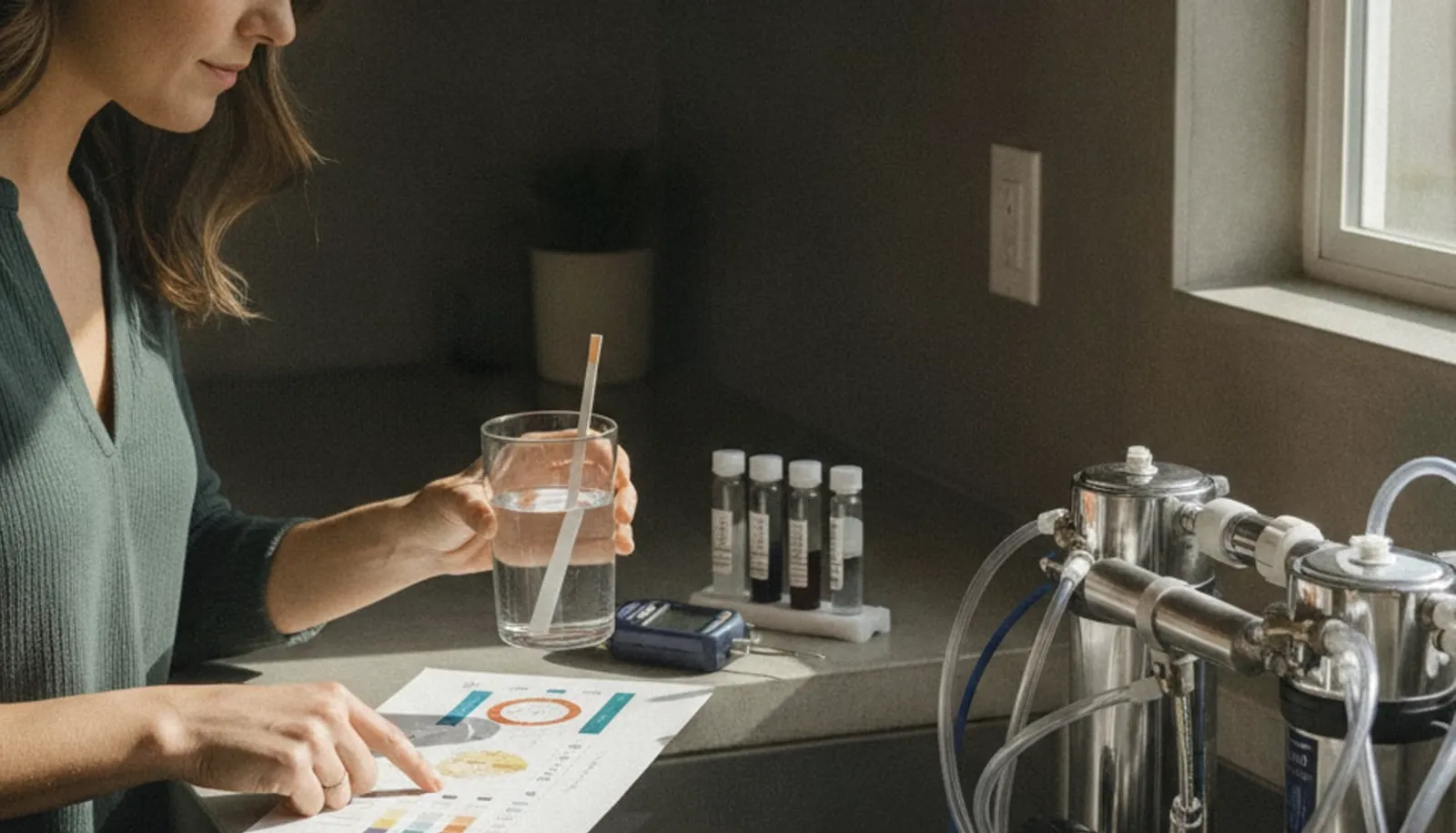
How to test your tap water at home
According to the City of San Diego, tap water in its distribution system typically measures around 16 grains per gallon, though the figure shifts by neighborhood and seasonal demand. A store-bought test strip can give a fast screening reading for whatever parameters that particular kit covers, yet it cannot stand in for a proper lab analysis or confirm that water is safe to drink.
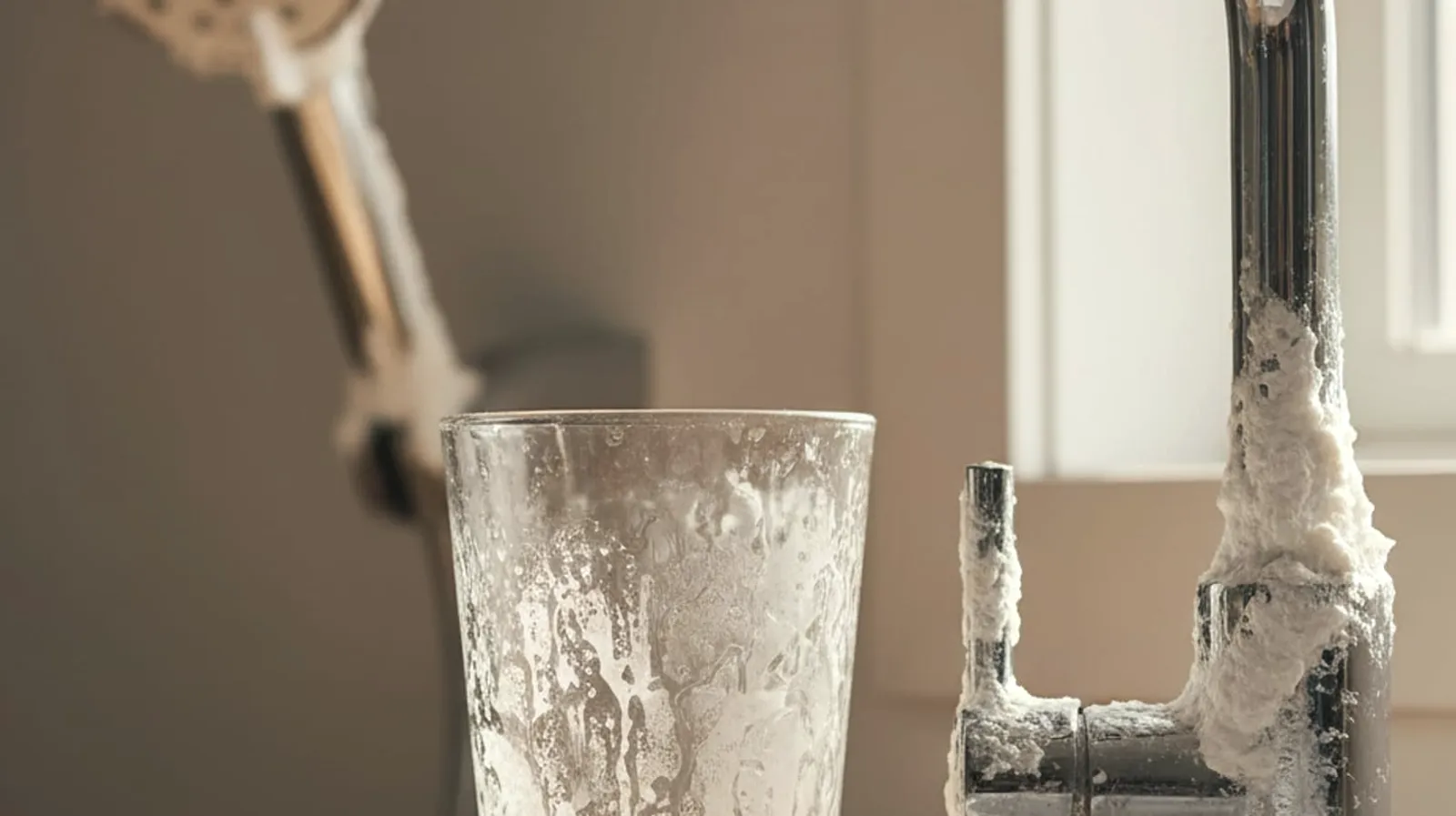
How to spot hard water in your home
Hard water minerals rarely announce themselves through scent or sight. Instead, look for scale, spots, or shifts in how soap foams. Other issues can mimic these clues, so run a proper hardness test before settling on any treatment option.
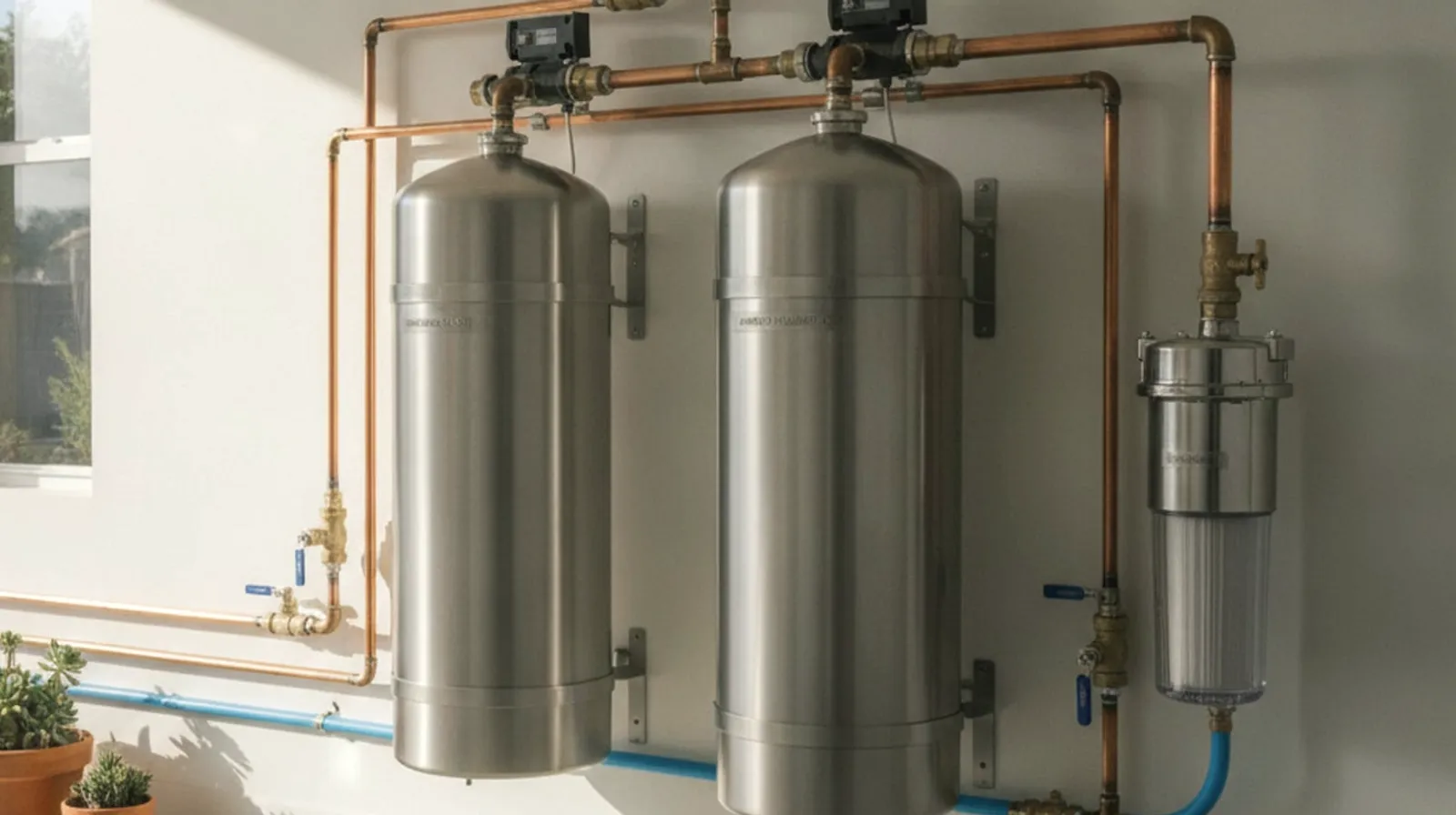
How a whole-house water filtration system works
A point-of-entry water-treatment setup sits on the line that feeds the home, so every fixture past it gets treated water. What gets removed depends on the specific gear, filter media, water flow, and what the unit is certified to reduce. Knowing this scope makes it easier to weigh a whole-house setup against a point-of-use unit attached to a single tap.